
Finding where stinging insects are nesting on your property is often the first step toward resolving the problem. Wasps, yellowjackets, and hornets each have preferred nesting locations, and Portland homes provide a wide range of options—from sheltered spots under rooflines to underground cavities in the yard. Knowing where to look can help you identify a problem early, before the colony reaches its peak size in late summer. If you find an active nest, professional stinging insect control is the safest way to handle it.
Under Eaves, Soffits, and Rooflines
The overhangs and sheltered areas along a home’s roofline are some of the most common nesting locations for paper wasps. These spots provide protection from rain and wind, which is especially valuable in Portland’s wet climate. Paper wasps attach their open, comb-shaped nests to the underside of eaves, soffits, porch ceilings, and carport roofs.
These nests are often visible from the ground, making them easier to spot than other types. Homeowners frequently discover them when they notice wasps flying in and out of a specific area along the roofline. Because paper wasp nests tend to be smaller—typically housing a few dozen wasps—they may go unnoticed until someone walks directly beneath them or begins outdoor maintenance nearby.
Checking eaves and soffits in early spring, when queens are just starting to build new nests, can catch the problem when the nest is small and the colony contains only a handful of individuals.
In the Ground
Underground nests are one of the most dangerous nesting situations Portland homeowners face. Yellowjackets are the primary species that nests below ground, and they commonly use abandoned rodent burrows, gaps in retaining walls, spaces under mulch or landscape fabric, and natural cavities in loose or sandy soil.
Underground nests are difficult to detect because the only visible sign is usually a small hole in the ground with yellowjackets entering and exiting. The nest itself can be several inches to over a foot below the surface, and by late summer, it may contain thousands of workers.
These nests are frequently discovered when someone walks over them, runs a lawnmower nearby, or disturbs the area during gardening. The vibration agitates the colony, and the response can be fast and aggressive. Lawns, garden beds, planting strips, and areas along the foundation are all common locations for underground yellowjacket nests in Portland.
Inside Wall Voids
Yellowjackets and, less commonly, European hornets can establish nests inside the walls of a home. They enter through small gaps in siding, cracks around window and door frames, openings where utility lines penetrate the wall, or gaps at the junction of the roofline and siding.
A wall void nest can be difficult to identify from the outside. The most common signs are a steady stream of insects entering and exiting a specific gap in the exterior, a faint buzzing or humming sound coming from inside a wall, or—in more advanced cases—yellowjackets appearing inside the living space of the home.
Wall void nests are particularly problematic because they are inaccessible without professional tools and because insecticide sprays applied to the entry point can drive the insects deeper into the structure rather than eliminating them. In some cases, blocked entry points cause the colony to chew through interior drywall in search of an alternate exit.
This type of nest should always be handled by a professional who can treat the colony effectively without creating additional access points into the home.
In Trees and Shrubs
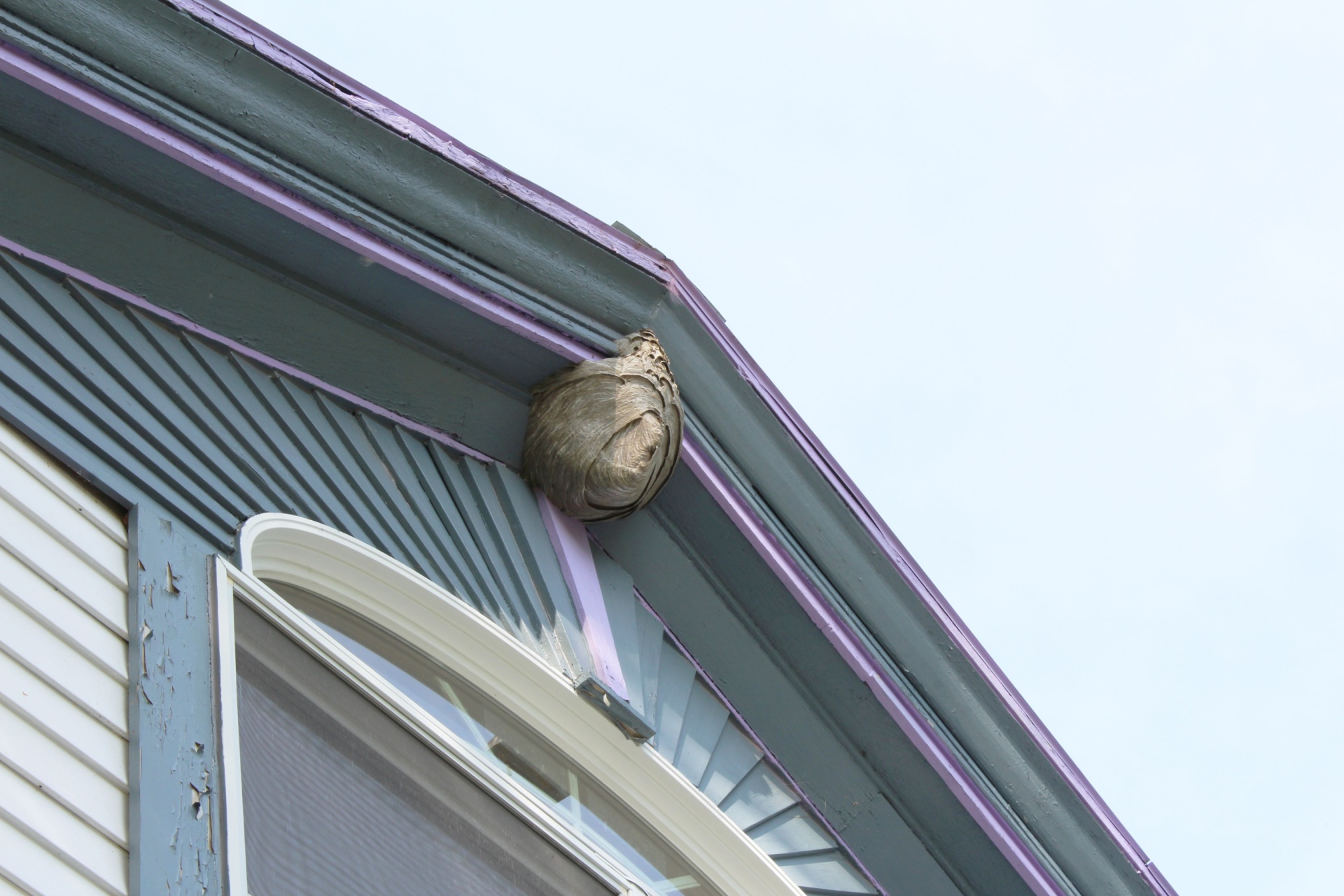
Bald-faced hornets build their large, enclosed, teardrop-shaped nests in trees and tall shrubs. These nests are suspended from branches and are often located well off the ground, though they can also be found at lower heights. A mature bald-faced hornet nest can be quite large and is typically gray or light brown in color.
Paper wasps also occasionally build nests in dense shrubs, particularly in sheltered spots where foliage provides protection from weather and direct sunlight.
Nests in trees and shrubs may go unnoticed during the summer when foliage is thick. They often become visible in fall after leaves drop. However, by that time, the colony is at or past its peak and may be winding down for the season. Nests discovered earlier in the summer, when the colony is still growing, should be addressed before the population reaches its maximum.
In Sheds, Garages, and Outdoor Structures
Any enclosed or semi-enclosed structure that is not frequently used can become a nesting site. Sheds, detached garages, playhouses, covered porches, and even outdoor grills that sit unused for weeks at a time can attract nesting stinging insects.
Paper wasps are the most common species to nest in these locations, often attaching their nests to rafters, ceiling joists, or the underside of stored items. Yellowjackets will also nest in these spaces if they can find a suitable cavity or if there is access to the interior through gaps in the structure.
Regularly inspecting outbuildings, especially in spring and early summer, helps catch new nests before they become established.
In Attics and Crawl Spaces
Attics with gaps in the roofline or vents without proper screening provide entry points for yellowjackets and European hornets. These spaces offer warmth, protection from weather, and enough room for a colony to grow undisturbed. Crawl spaces with open or damaged access points can also attract ground-nesting yellowjackets.
Signs of a nest in the attic include hearing buzzing or scratching sounds overhead, finding dead stinging insects around interior light fixtures or windows, or noticing insects entering the attic through exterior openings.
What to Do If You Find a Nest
If you have identified an active nest on or near your Portland home, the safest step is to avoid disturbing it and contact a licensed pest control provider. Nests in high-traffic areas, inside walls, underground, or in enclosed structures all carry a risk of aggressive defensive behavior from the colony.
True Guard Pest and Wildlife handles stinging insect nest identification and removal across the Portland metro area. We locate the nest, determine the species, and remove it safely using professional methods and equipment. If you have noticed stinging insect activity around your property, request a free estimate and we will take care of it.