
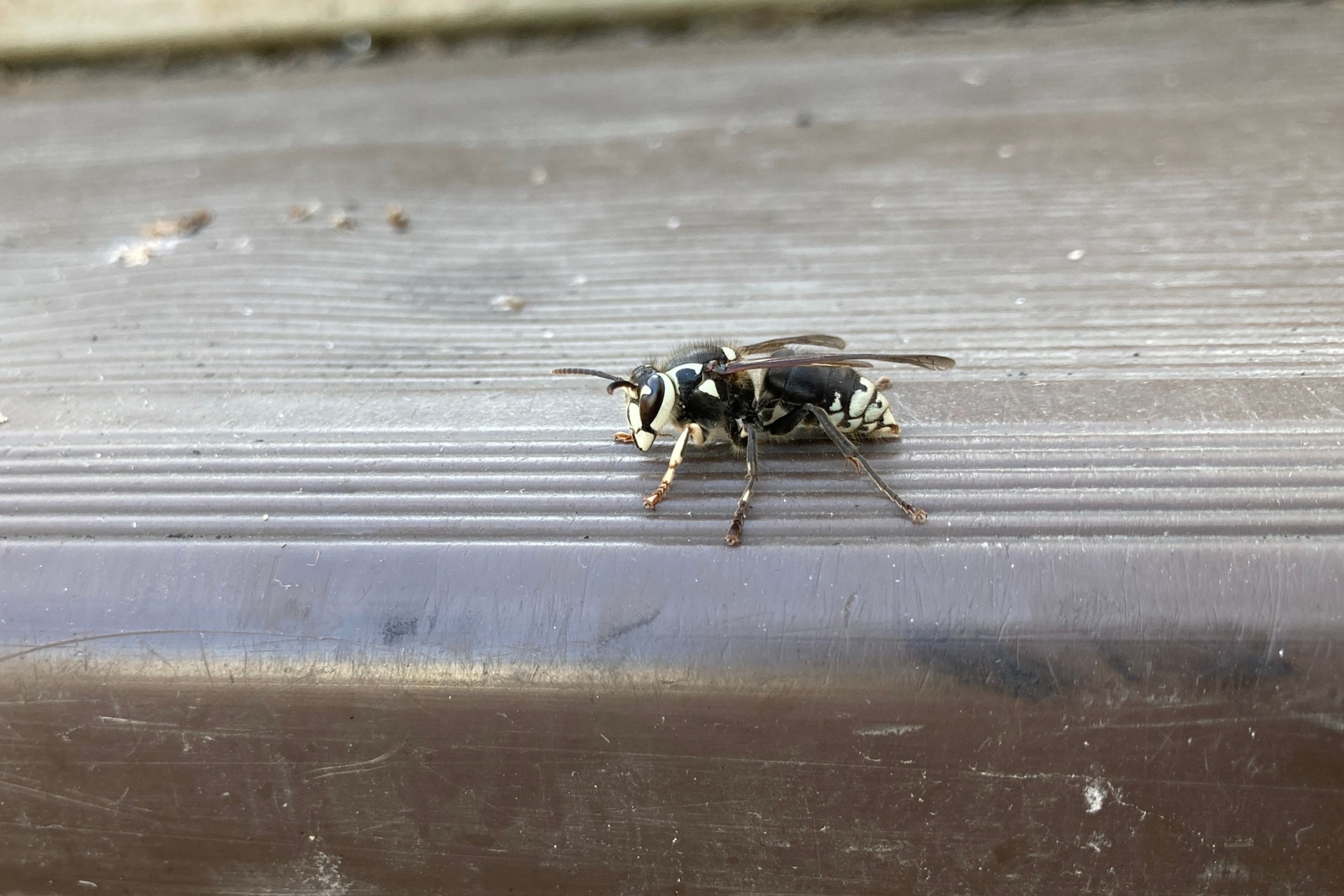
Portland homeowners often use the terms “wasp,” “yellowjacket,” and “hornet” interchangeably, but these are distinct insects with different behaviors, nesting habits, and risk levels. Knowing the difference matters when it comes to deciding how to respond to a nest on your property and whether you need professional stinging insect control.
Here is how to tell them apart and what each one means for your home.
How They Are Related
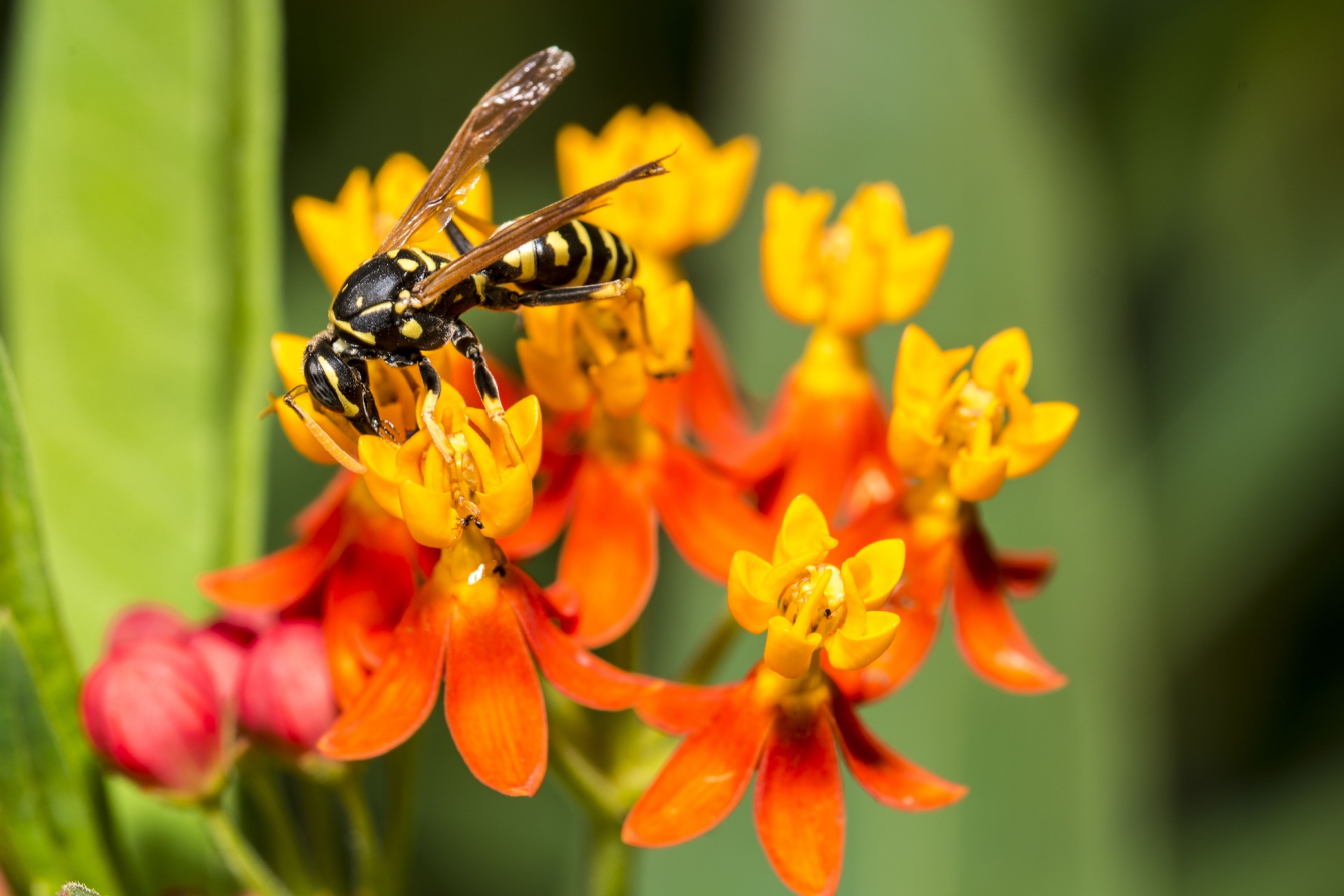
All yellowjackets and hornets are technically wasps. The term “wasp” covers a large group of insects that includes thousands of species. When most people in Portland say “wasp,” they are usually referring to paper wasps specifically. Yellowjackets and hornets are types of social wasps that belong to different groups within the same family.
The practical differences between them come down to size, appearance, temperament, and where they build their nests.
Paper Wasps
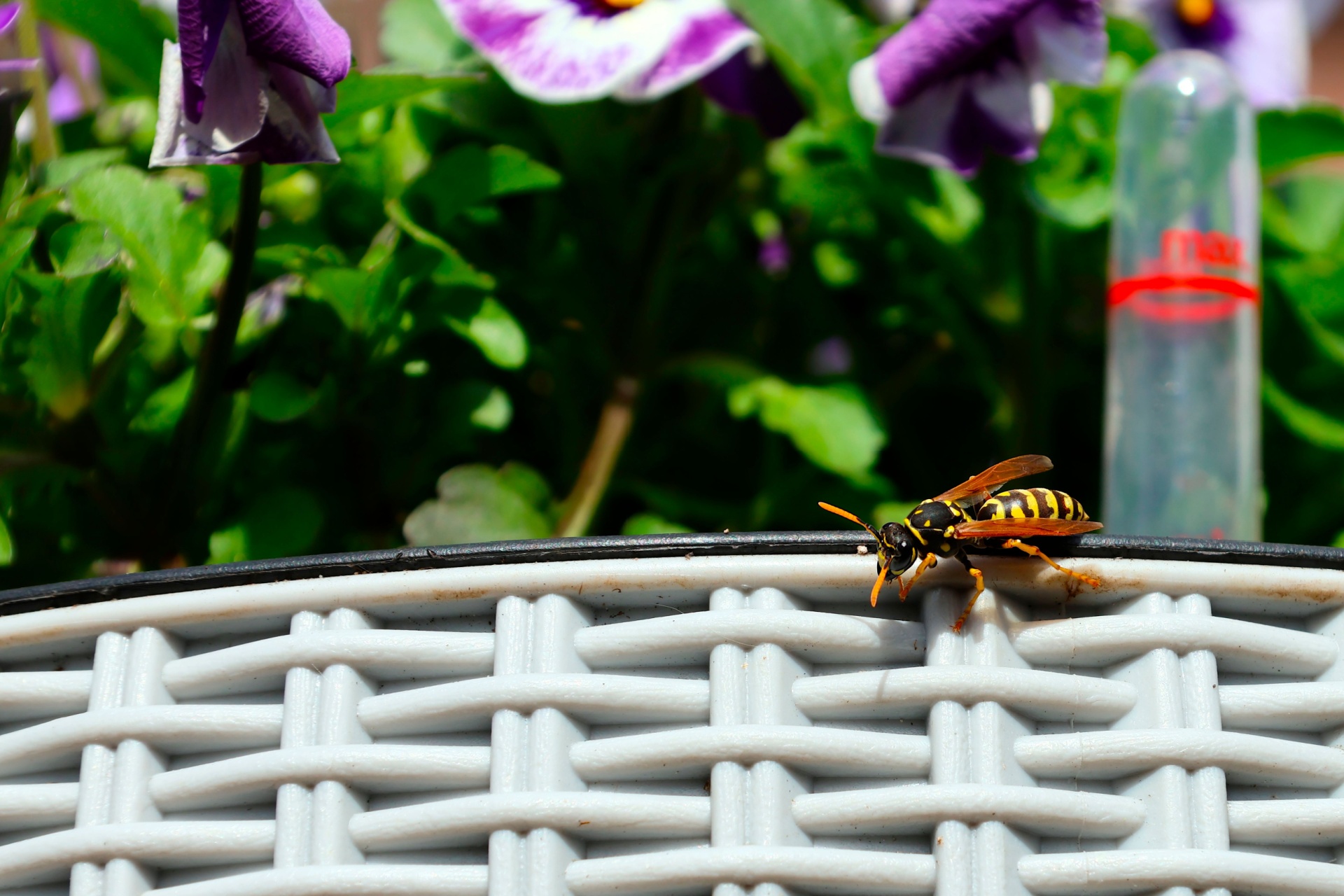
Paper wasps are the most commonly encountered wasp around Portland homes. They have a slender build, a narrow waist, and long legs that trail visibly behind them during flight. Most species in the Portland area are brown with yellow or reddish-orange markings, and they range from about three-quarters of an inch to just over one inch long.
Nests: Paper wasps build open, comb-style nests that look like small upside-down umbrellas. The cells of the nest are visible from below. These nests are typically found in sheltered spots—under eaves, porch roofs, deck railings, and inside outdoor light fixtures or mailboxes. A typical paper wasp nest houses a few dozen individuals at most.
Behavior: Paper wasps are relatively docile compared to yellowjackets. They will sting to defend their nest, but they are not aggressive foragers and rarely bother people who are eating or drinking outdoors. Most stings from paper wasps happen when someone accidentally disturbs a nest—reaching into a spot where a nest is tucked away or brushing against one while doing yard work.
Risk level: Moderate. Their nests tend to be small, and they are unlikely to chase or swarm. However, their preference for building nests in high-traffic areas on homes means encounters are common.
Yellowjackets
Yellowjackets are the stinging insects that create the most conflict with Portland homeowners. They are smaller and stockier than paper wasps, typically about half an inch long, with a compact body and smooth, shiny appearance. Their yellow and black banding is bright and distinct, which leads many people to mistake them for honeybees.
Nests: Yellowjackets build enclosed nests, meaning the internal comb structure is surrounded by a papery outer shell. In Portland, these nests are frequently located underground—in old rodent burrows, under mulch or landscaping, and in soil along foundations. They also nest inside wall voids, attics, hollow logs, and other enclosed spaces. Underground and wall void nests are particularly dangerous because they are often discovered only after being accidentally disturbed.
Behavior: Yellowjackets are significantly more aggressive than paper wasps. They are active foragers that are attracted to sugary foods, meats, garbage, and open beverages, which brings them to outdoor eating areas throughout the summer. When a colony is disturbed—by a lawnmower passing over an underground nest, for example—yellowjackets respond quickly and in numbers. They can sting multiple times, and they release a chemical signal that attracts other colony members to join the attack.
Colony populations grow throughout the summer and peak between August and October, which is when yellowjacket aggression and human encounters are at their highest.
Risk level: High. Large colony size, defensive behavior, ability to sting repeatedly, and a tendency to nest in hidden locations make yellowjackets the most hazardous stinging insect in the Portland area.
Hornets
Two hornet species are found in the Portland area: bald-faced hornets and European hornets.
Bald-faced hornets are technically a type of yellowjacket, but they are visually and behaviorally distinct. They are larger—about three-quarters of an inch—with a black body and prominent white or ivory markings on the face and abdomen. They build large, enclosed, teardrop-shaped nests that hang from tree branches, building overhangs, or other elevated structures. A mature bald-faced hornet nest can grow to the size of a basketball or larger.
Bald-faced hornets are highly territorial. They will aggressively defend their nest and are known to pursue threats farther than most other stinging insects. Removing a bald-faced hornet nest is not something homeowners should attempt without professional help.
European hornets are the largest true hornet in the region, measuring over an inch long, with brown and yellow coloring. They nest in hollow trees, wall voids, and attic spaces. Unlike most stinging insects in Portland, European hornets are active at night and are attracted to outdoor lighting. They are less commonly encountered than yellowjackets or paper wasps, but their sting is more painful due to their size.
Risk level for both: High. Both species are defensive around their nests and capable of multiple stings. Bald-faced hornet nests in particular should be left to a professional.
Quick Comparison
The simplest way to tell them apart at a glance:
- Paper wasp: Slender, long-legged, brown with lighter markings, open nest, relatively calm
- Yellowjacket: Compact, bright yellow and black, enclosed or underground nest, aggressive
- Bald-faced hornet: Larger, black and white, large hanging nest, very defensive
- European hornet: Largest, brown and yellow, nests in cavities, active at night
What to Do When You Find a Nest
For any species, the safest approach is to keep your distance and avoid disturbing the nest. Small paper wasp nests in low-traffic areas may not require immediate action, but nests near doorways, walkways, play areas, or outdoor gathering spaces should be addressed.
Yellowjacket nests—especially underground or wall void nests—and hornet nests of any type should be handled by a licensed professional. The risk of multiple stings and potential allergic reactions makes DIY removal unsafe in most situations.
True Guard Pest and Wildlife identifies the species, locates the nest, and removes it safely. If you have found a nest on your Portland property or are unsure what species you are dealing with, contact us for a free estimate.