
Hobo spiders have long been associated with frightening stories about dangerous bites, but much of that reputation is based on outdated information. While these spiders can be found in Portland and other parts of the Pacific Northwest, current research shows they are far less concerning than many homeowners believe. Here’s what the evidence says about hobo spiders, where they’re commonly found, and when their presence should actually be a cause for concern.
What Is a Hobo Spider?
The hobo spider (Eratigena agrestis) is a ground-dwelling funnel-weaving spider that belongs to the Agelenidae family. Native to Europe, it became established in the Pacific Northwest after being accidentally introduced to North America decades ago. Today, it is one of several funnel weaver species commonly found throughout Oregon, including the Portland metro area.
Unlike spiders that build sticky webs to catch prey, hobo spiders create broad, horizontal sheet webs with a funnel-shaped retreat where they remain hidden until an insect crosses the web. They rely on speed rather than sticky silk, quickly rushing out to capture prey before returning to the safety of the funnel. This behavior makes them effective hunters of insects but also means they typically stay out of sight unless disturbed.
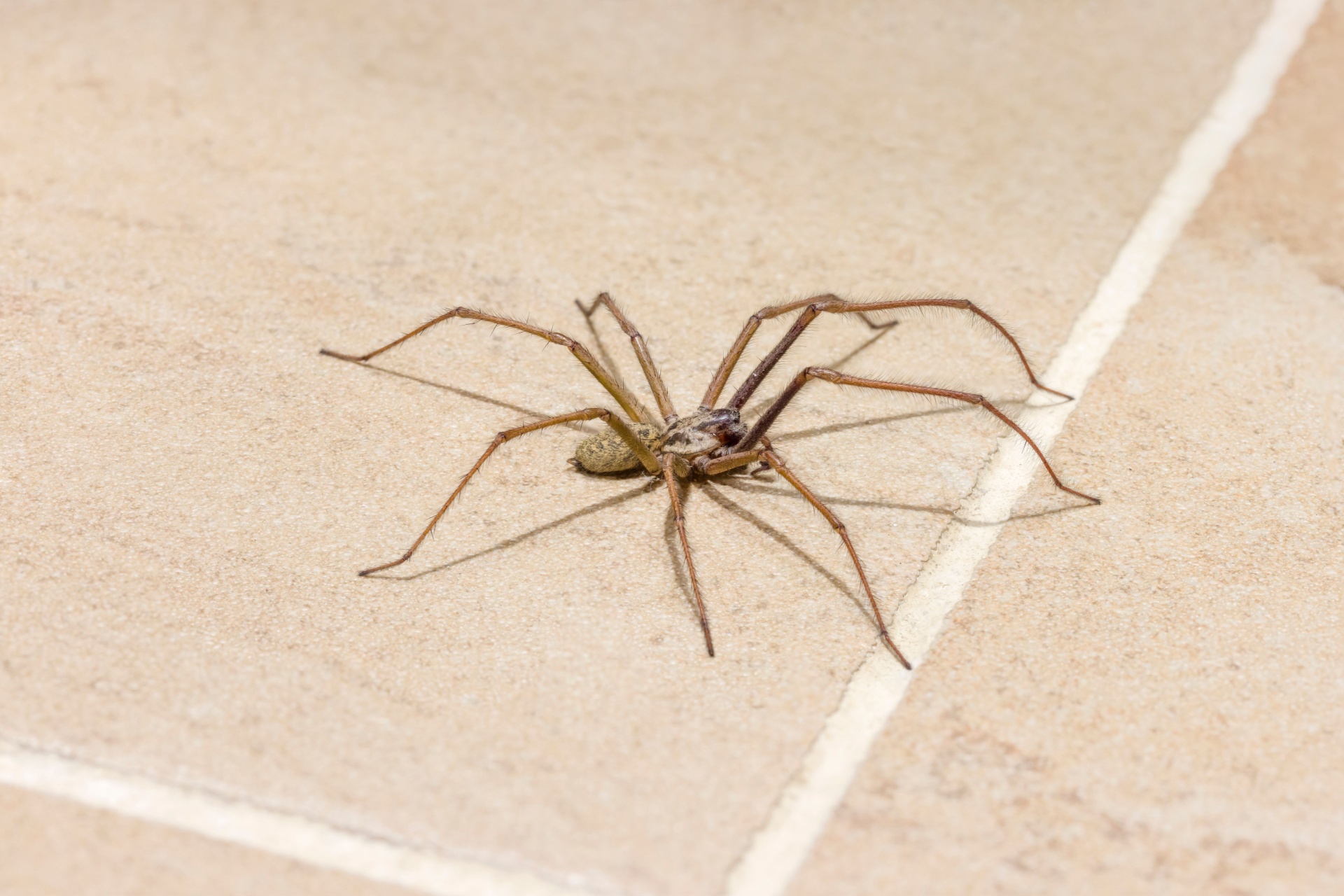
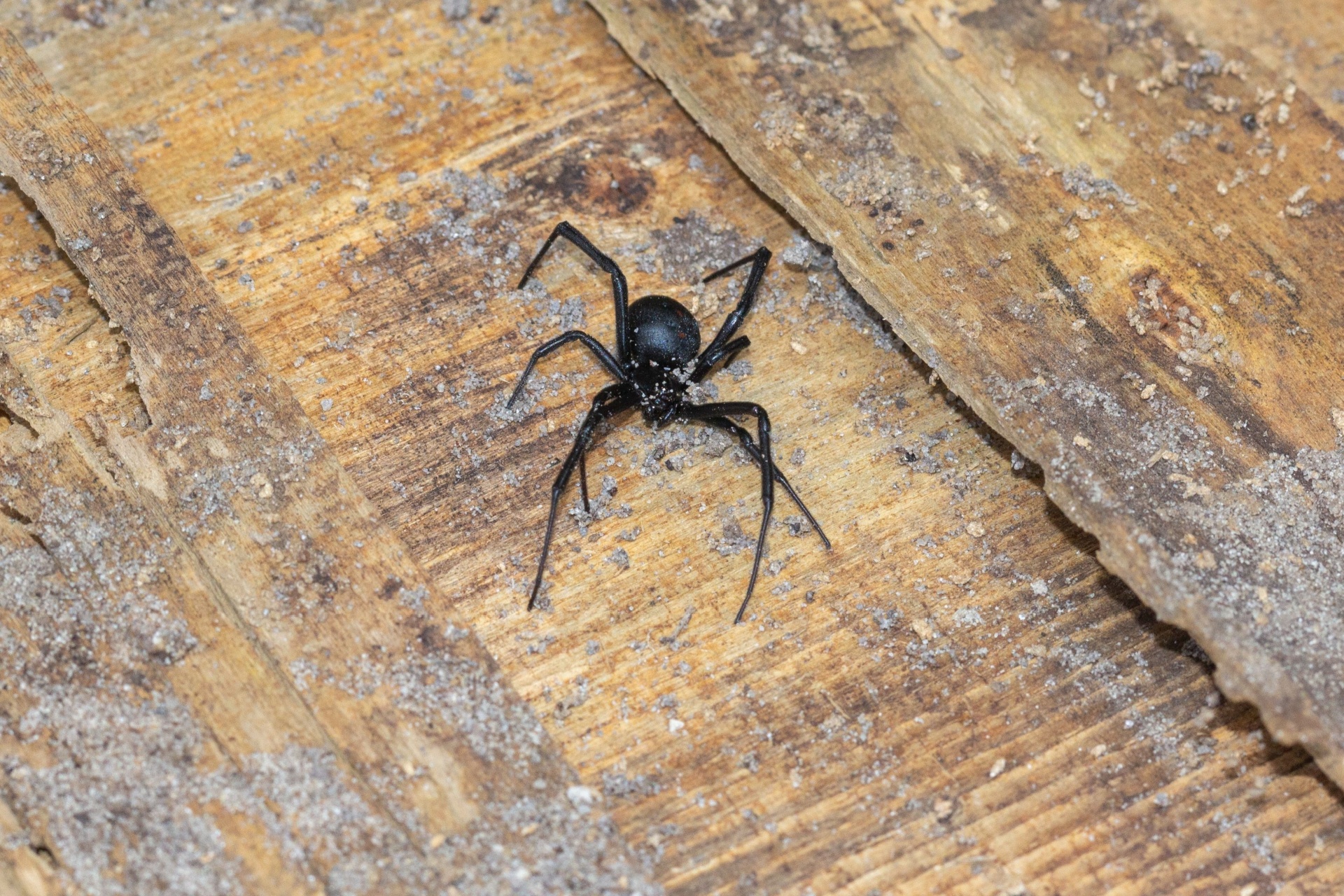
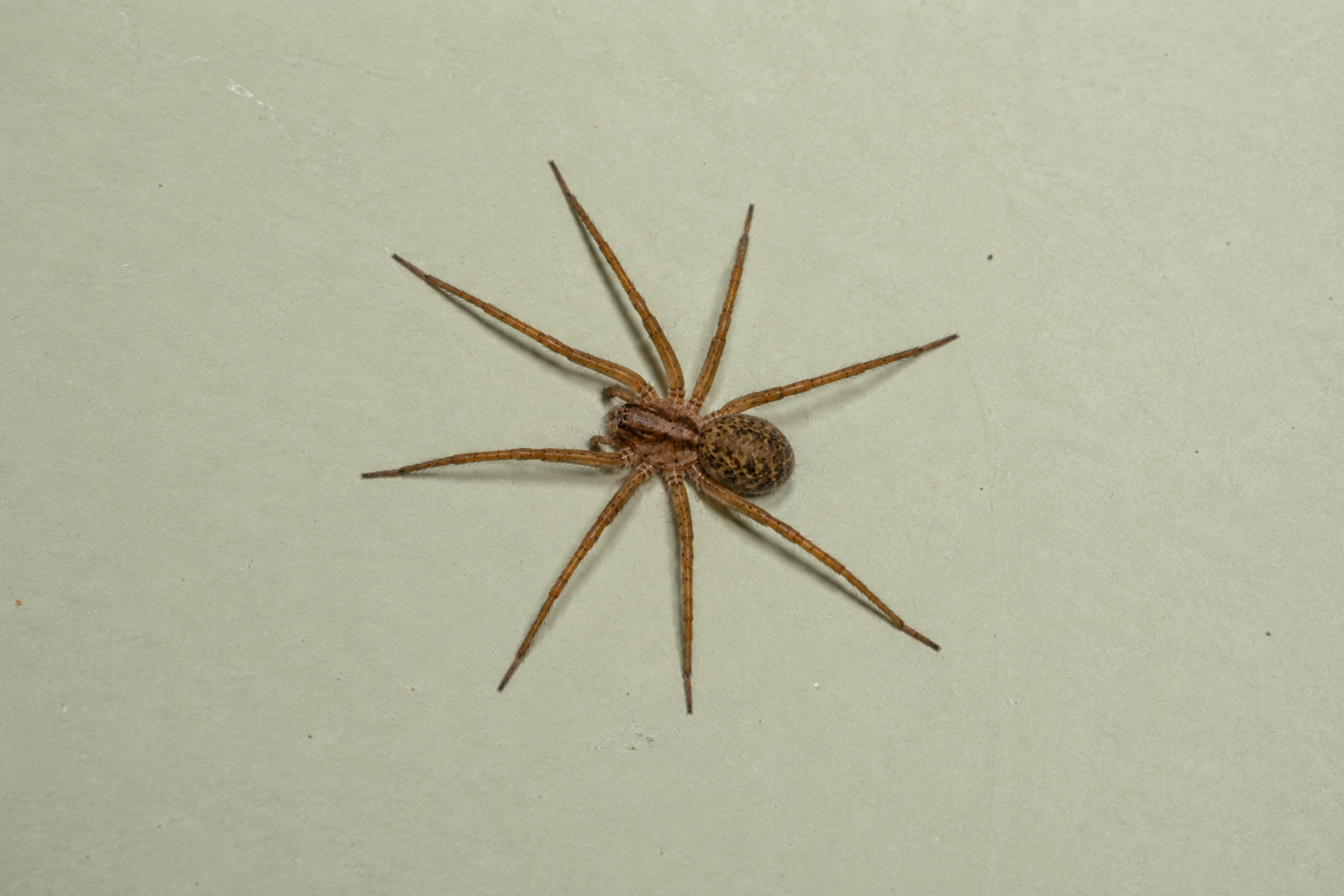
Adult hobo spiders are generally brown with long legs and subtle chevron-like markings on their abdomen, though these features can closely resemble those of other common spiders found in Portland. They’re often mistaken for giant house spiders, barn funnel weavers, and even wolf spiders, making accurate identification difficult without close examination. Hobo spiders are most commonly noticed from late summer through early fall, when mature males leave their webs in search of mates and occasionally wander into garages, basements, crawl spaces, and other ground-level areas of homes.
Are Hobo Spiders Dangerous?
One of the biggest misconceptions about hobo spiders is that they are highly venomous to people. This belief became widespread during the late 20th century, but current scientific evidence does not support that reputation.
Today, many entomologists and medical experts no longer consider the hobo spider to be a medically significant species in North America. In fact, there is very little verified evidence showing that hobo spider bites cause severe skin damage or necrotic wounds.
Most reported “hobo spider bites” were never confirmed by identifying the spider responsible. Many skin conditions—including bacterial infections, allergic reactions, and bites from other insects—can resemble spider bites, leading to mistaken conclusions.
That doesn’t mean a bite is impossible. Like most spiders, a hobo spider may bite if it becomes trapped against the skin or feels threatened. However, confirmed bites generally result in mild symptoms similar to those caused by many other common spiders, such as:
- Temporary redness around the bite area
- Mild swelling
- Localized pain or tenderness
- Minor itching
- Slight irritation that resolves within a few days
Serious reactions are uncommon. If you experience severe symptoms after any suspected spider bite, it’s always best to seek medical evaluation, as the cause may not be a spider at all.
Why Are Hobo Spiders Common in Portland?
Portland’s environment naturally supports a wide variety of spiders, and hobo spiders are no exception. The region’s mild, damp climate and steady insect activity provide the food and shelter they need to thrive. Outdoor features like rock walls, woodpiles, dense landscaping, and home foundations create ideal places for these ground-dwelling spiders to build their funnel-shaped webs.
Homeowners are most likely to notice hobo spiders from late summer into early fall, when mature males leave their webs in search of mates. During this time, they may wander into garages, basements, crawl spaces, and other ground-level areas, making indoor sightings much more common. Their increased presence during this season is a normal part of their life cycle rather than a sign that they’re becoming more aggressive.
Homes with easy access points and plentiful insect activity are also more attractive to hobo spiders. Gaps around doors, foundation cracks, and utility openings allow them to move indoors, while insects provide a dependable food source. As a result, repeated spider sightings often point to favorable conditions around the property rather than an unusually large hobo spider population.
How Can You Tell a Hobo Spider Apart From Other Portland Spiders?
Hobo spiders are often confused with several other brown spiders commonly found around Portland, making identification more difficult than many homeowners expect. Their size, coloring, and body shape closely resemble those of giant house spiders, barn funnel weavers, and even some wolf spiders. Because these species share many of the same characteristics, it’s easy to misidentify a harmless spider as a hobo spider based on appearance alone.
One feature that sets hobo spiders apart is the type of web they build. Rather than creating the classic orb-shaped webs often seen in gardens, hobo spiders construct flat, sheet-like webs with a funnel-shaped retreat where they hide until prey passes by. These webs are usually found at ground level in places like garages, crawl spaces, retaining walls, woodpiles, and around home foundations.
Even with these clues, positively identifying a hobo spider can be challenging. Differences between hobo spiders and similar species often involve subtle details that aren’t easily visible without magnification. Factors such as body markings, eye arrangement, and other physical characteristics are typically needed for accurate identification, which is why experts generally avoid identifying them from a quick glance or a single photo.
Instead of trying to determine the exact species, it’s often more helpful to pay attention to where spiders are appearing and how often you’re seeing them. Frequent spider activity indoors may indicate that your home offers easy entry points or supports a steady insect population. Addressing those underlying conditions is usually a more effective long-term solution than focusing on identifying every spider you come across.
Why Do Hobo Spiders Enter Homes?
Like many spiders, hobo spiders aren’t trying to invade your living space—they’re following food and shelter.
Homes provide stable temperatures, protection from heavy rain, and plenty of insects to eat. Small gaps around foundations, doors, garage thresholds, crawl space vents, and utility penetrations make it easy for spiders to move indoors.
Indoor conditions that attract hobo spiders often include:
- An abundance of insects living indoors or around the home’s exterior, giving hobo spiders a consistent source of prey and a reason to remain nearby instead of moving on.
- Quiet, low-traffic spaces that are rarely disturbed, such as storage rooms, unfinished basements, crawl spaces, and the corners of garages where they can establish webs without interruption.
- Small structural gaps at ground level, including worn door sweeps, foundation cracks, utility line openings, and spaces beneath siding that make it easy for spiders to move indoors unnoticed.
- Items stored directly against the home’s foundation, such as firewood, stacked lumber, planters, or unused materials, which create sheltered transition areas between outdoor habitats and the interior.
- Exterior conditions that support insect populations, including dense landscaping, ground cover, mulch beds, and outdoor lighting that attract the insects hobo spiders depend on for food.
- Minimal routine maintenance around entry points, allowing webs, debris, and insect activity to accumulate over time, creating an environment that’s more inviting for spiders to settle close to the home.
In many cases, seeing multiple spiders is actually a sign that your property is supporting a healthy insect population rather than a spider problem alone.
What Should You Do If You Find a Hobo Spider?
Finding one hobo spider isn’t necessarily cause for alarm. An occasional spider indoors is common in Portland, especially during the fall.
If you notice one, safely capture it with a container or vacuum it if necessary. Avoid handling spiders directly, even if they’re considered low risk.
More importantly, look for conditions that may be encouraging spiders around your property. Consider:
- Checking where the spider was found, as its location can reveal how it entered your home. A spider near a garage, basement, crawl space, or exterior wall often points to a nearby entry route rather than random indoor activity.
- Making the area less appealing for spiders to settle, especially by removing unnecessary storage, cardboard boxes, and items that have been sitting undisturbed for long periods in low-traffic spaces.
- Looking beyond the spider itself and checking for insect activity, since spiders rarely stay where there’s little food available. Reducing the insects around your home often leads to fewer spiders over time.
- Examining the outside of your home for hidden spider habitats, such as woodpiles, retaining walls, dense shrubs, or decorative rock beds where hobo spiders commonly establish their webs before moving closer to the house.
- Keeping exterior entry areas clean, including garage thresholds, foundation edges, and corners where leaves, debris, and old webs can accumulate and create favorable conditions for spiders.
- Having the property professionally evaluated if sightings become a recurring pattern, especially when spiders continue appearing in the same areas despite routine cleaning and maintenance. A thorough inspection can identify the conditions allowing them to persist and help prevent future activity.
Taking these preventive steps often reduces activity from multiple spider species—not just hobo spiders.
When Does a Spider Problem Require Professional Help?
Seeing an occasional spider indoors is common in Portland, particularly during late summer and early fall when hobo spiders become more active. However, if spiders are appearing frequently, returning to the same areas, or you’re noticing a growing number of webs around your garage, basement, crawl space, or foundation, it may indicate that your home provides favorable conditions for ongoing spider activity rather than isolated encounters.
A professional inspection can help determine why spiders keep returning by identifying hidden entry points, areas with increased insect activity, and locations where spiders are likely nesting or finding shelter. Addressing these underlying conditions not only reduces current spider activity but also helps prevent recurring problems, making it a more effective long-term solution than simply removing the spiders you happen to find indoors.
Should You Be Concerned About Hobo Spiders?
Hobo spiders aren’t nearly as dangerous as their reputation suggests, but recurring spider activity should never be ignored. While these spiders pose little risk to most people, frequent sightings can indicate that your home provides the shelter and conditions spiders are looking for. Identifying the species and addressing the underlying cause of spider activity is the most effective way to reduce future problems and maintain a more comfortable living environment.
True Guard Pest and Wildlife is a trusted resource for homeowners seeking reliable answers about spider activity in the Portland area. Backed by local experience and a commitment to accurate assessments, our team provides expert recommendations and effective solutions designed to address the unique challenges of each property. To take the guesswork out of identifying hobo spiders and other common Portland species, reach out to True Guard Pest and Wildlife for professional spider solutions focused on accurate identification and species-specific treatments.