
Spotting a spider inside your home can be unsettling, especially if you’re unsure whether it’s harmless or something that requires attention. While most spiders found around Portland homes are beneficial predators that help reduce insect populations, some species are more likely to wander indoors than others. Learning how to identify the most common spiders can help you understand what you’re seeing and determine when spider control in Portland may be the right solution for your home.
Giant House Spider
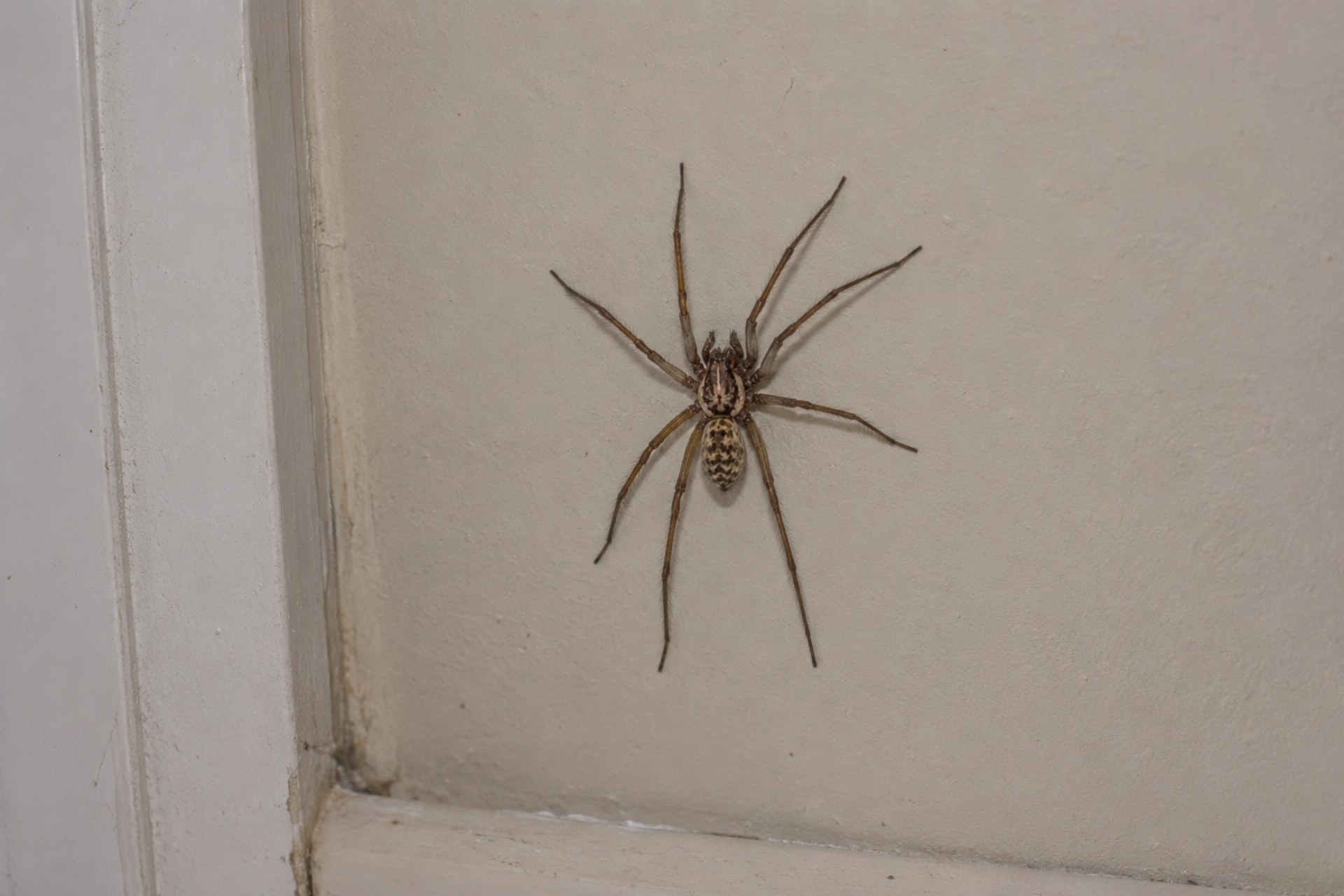
The giant house spider is one of the largest common spiders in Portland homes and is often the species that surprises homeowners the most. Adults are typically brown to dark brown with subtle chevron markings on the abdomen and long, slender legs that can give them a leg span of nearly four inches. Although they’re frequently mistaken for wolf spiders because of their size, giant house spiders have a slimmer body and build funnel-shaped webs instead of actively hunting. Their quick movements can make them appear aggressive, but they’re naturally shy and usually retreat when disturbed.
These spiders prefer cool, quiet areas such as basements, crawl spaces, garages, utility rooms, and storage spaces where insects are plentiful. Homeowners are most likely to notice them during late summer and early fall when mature males leave their webs to search for females. Giant house spiders feed on flies, beetles, moths, and other small insects, making them beneficial predators despite their intimidating appearance. Seeing one occasionally is normal, but repeated sightings may indicate that your home offers abundant insects, easy entry points, or ideal hiding places.
Hobo Spider
The hobo spider is a medium-sized brown spider commonly found throughout the Pacific Northwest and is sometimes seen around Portland homes. It typically has a light to dark brown body with subtle herringbone markings on the abdomen and legs that lack the dark bands found on many other spider species. Because of its plain appearance, it’s often confused with giant house spiders and other funnel-weaving spiders. While homeowners once associated hobo spiders with dangerous bites, modern research has found little evidence supporting many of those earlier claims.
Unlike spiders that build webs high in corners, hobo spiders create funnel-shaped webs close to the ground around foundations, crawl spaces, garages, retaining walls, and landscaped areas. They’re most commonly seen indoors during late summer and early fall when mature males wander in search of females. Hobo spiders generally avoid people and prefer staying hidden unless disturbed. If you begin seeing them frequently inside your home, it may be a sign that nearby landscaping, cracks around the foundation, or existing insect activity are providing favorable conditions.
Common House Spider
The common house spider is one of the most frequently encountered indoor spiders in Portland and has adapted exceptionally well to living alongside people. Adults are relatively small, usually tan, gray, or brown, with a rounded abdomen and long, slender legs. Their coloring helps them blend into walls, ceilings, and corners, making them easy to overlook until their webs become noticeable. Unlike hunting spiders, common house spiders spend most of their lives waiting in their webs for insects to become trapped.
These spiders build irregular, tangled cobwebs in quiet areas such as ceiling corners, window frames, closets, attics, laundry rooms, and storage spaces. Once they’ve established a suitable location, they may remain there for weeks as long as insects are available. While they’re harmless to people, an increase in cobwebs throughout the home often suggests there’s a steady supply of flies, gnats, or other insects attracting them. Removing both the webs and the insects they rely on is often the most effective way to reduce their presence.
Cellar Spider
Cellar spiders, often called “daddy longlegs” by homeowners, are easy to recognize because of their tiny bodies and extremely long, delicate legs. Their bodies are usually pale tan, gray, or light brown, while their thin legs can stretch several times the length of their body. Despite their fragile appearance, cellar spiders are skilled predators and are often mistaken for harvestmen, which are a completely different type of arachnid. Their loose, irregular webs also help distinguish them from spiders that build more organized web patterns.
As their name suggests, cellar spiders prefer cool, damp areas with little disturbance. They’re commonly found in basements, crawl spaces, garages, utility rooms, and unfinished portions of Portland homes where humidity levels remain relatively stable. One of their most recognizable behaviors is rapidly vibrating in their webs whenever they’re threatened, making it more difficult for predators to catch them. Cellar spiders primarily feed on flies, mosquitoes, gnats, and even other spiders, making them beneficial indoors, though an accumulation of dusty webs can become an unwanted nuisance over time.
Black Widow Spider
The black widow spider is one of the few spiders in the Portland area that homeowners should be able to recognize quickly. Adult females have a glossy jet-black body with a distinctive red or orange hourglass marking on the underside of the abdomen, while males are much smaller and lighter in color. Females have a rounded, bulb-like abdomen and long, slender legs, giving them a noticeably different appearance from the brown spiders most people encounter indoors. Although black widows are far less common than other household spiders, their distinctive markings make them one of the easiest species to identify.
Black widows prefer dark, secluded areas where they’re unlikely to be disturbed. Around Portland homes, they may be found in garages, crawl spaces, sheds, woodpiles, under decks, and around stored materials outdoors. They build irregular, tangled webs close to the ground and spend much of their time hanging upside down while waiting for insects to become trapped. Black widows are not aggressive and typically bite only when they’re accidentally disturbed or pressed against the skin. While encounters are uncommon, homeowners should exercise caution when reaching into dark storage areas or moving outdoor materials that have been left undisturbed for long periods.
Yellow Sac Spider
Yellow sac spiders are small, active hunters that are commonly found inside Portland homes throughout the year. They usually have a pale yellow, cream, or light green body with slightly darker mouthparts and translucent legs, allowing them to blend easily against walls and ceilings. Unlike web-building spiders, yellow sac spiders don’t rely on permanent webs to capture prey. Instead, they spend the night roaming in search of insects before returning to a small silk retreat, or “sac,” where they rest during the day.
These spiders are often found along ceilings, inside corners, behind furniture, beneath window trim, and near door frames where insects are active. Because they wander instead of staying in one location, homeowners are more likely to notice them than spiders that remain hidden in webs. Yellow sac spiders generally avoid people, but they can bite if they’re accidentally trapped against the skin. Their bites are usually mild and uncommon, though they may cause temporary redness or irritation. Reducing indoor insect activity and sealing small gaps around the home can help make your property less attractive to these wandering hunters.
Wolf Spider
Wolf spiders are large, fast-moving spiders known for their stocky bodies, hairy appearance, and excellent eyesight. Most species found around Portland are brown, gray, or dark brown with striped or mottled markings that help them blend into natural surroundings. One of their most distinctive features is their eight-eye arrangement, with two noticeably larger eyes positioned in the center of their face. Unlike many spiders, wolf spiders don’t build webs to catch prey. Instead, they actively hunt insects using their speed and sharp vision.
Wolf spiders are commonly found outdoors beneath rocks, mulch, woodpiles, landscaping materials, and around foundations, but they occasionally wander indoors through small openings around doors or garages. Homeowners are most likely to encounter them in basements, garages, laundry rooms, or other ground-level spaces. Female wolf spiders are especially fascinating because they carry their egg sacs attached to their abdomen and later transport dozens of newly hatched spiderlings on their backs. Despite their intimidating size, wolf spiders are generally shy and rarely bite unless they’re handled or feel threatened. Repeated indoor sightings often suggest that outdoor spiders are finding easy access into the home.
Why Are Spiders Finding Their Way Into Portland Homes?
Spiders don’t usually enter homes because they’re looking for people—they’re searching for food, shelter, and favorable environmental conditions. If insects are already present inside or around your property, spiders naturally follow because they’re one of their primary food sources. Seasonal weather changes also play a role, especially during late summer and fall when some species become more active while searching for mates or seeking stable indoor conditions.
Several factors can make your home more attractive to spiders, including:
- Cracks and gaps around doors, windows, vents, and utility openings.
- Outdoor lighting that attracts flying insects near entrances.
- Cluttered garages, basements, crawl spaces, and storage rooms that provide hiding places.
- Excess moisture from plumbing leaks, damp crawl spaces, or poor drainage.
- Shrubs, vines, firewood, and vegetation touching the home’s exterior.
- Existing insect populations that provide a steady food source.
Reducing spider activity often starts with addressing these conditions. Sealing potential entry points, keeping storage areas organized, minimizing excess moisture, and controlling the insects spiders feed on can significantly reduce the likelihood of seeing spiders indoors. While occasional sightings are normal, recurring spider activity may indicate underlying conditions that should be addressed before the population continues to grow.
A Better Way to Handle Spider Problems
Seeing a spider is one thing—knowing what type you’ve found can provide valuable peace of mind. While many of the spiders commonly found in Portland homes are harmless, recurring sightings or increasing spider activity may indicate it’s time to take a closer look. At True Guard Pest and Wildlife, our pest management experts help Portland homeowners identify common household spiders and recommend the most appropriate solution based on the situation. If spiders have become a regular sight around your property, contact True Guard Pest and Wildlife today.