
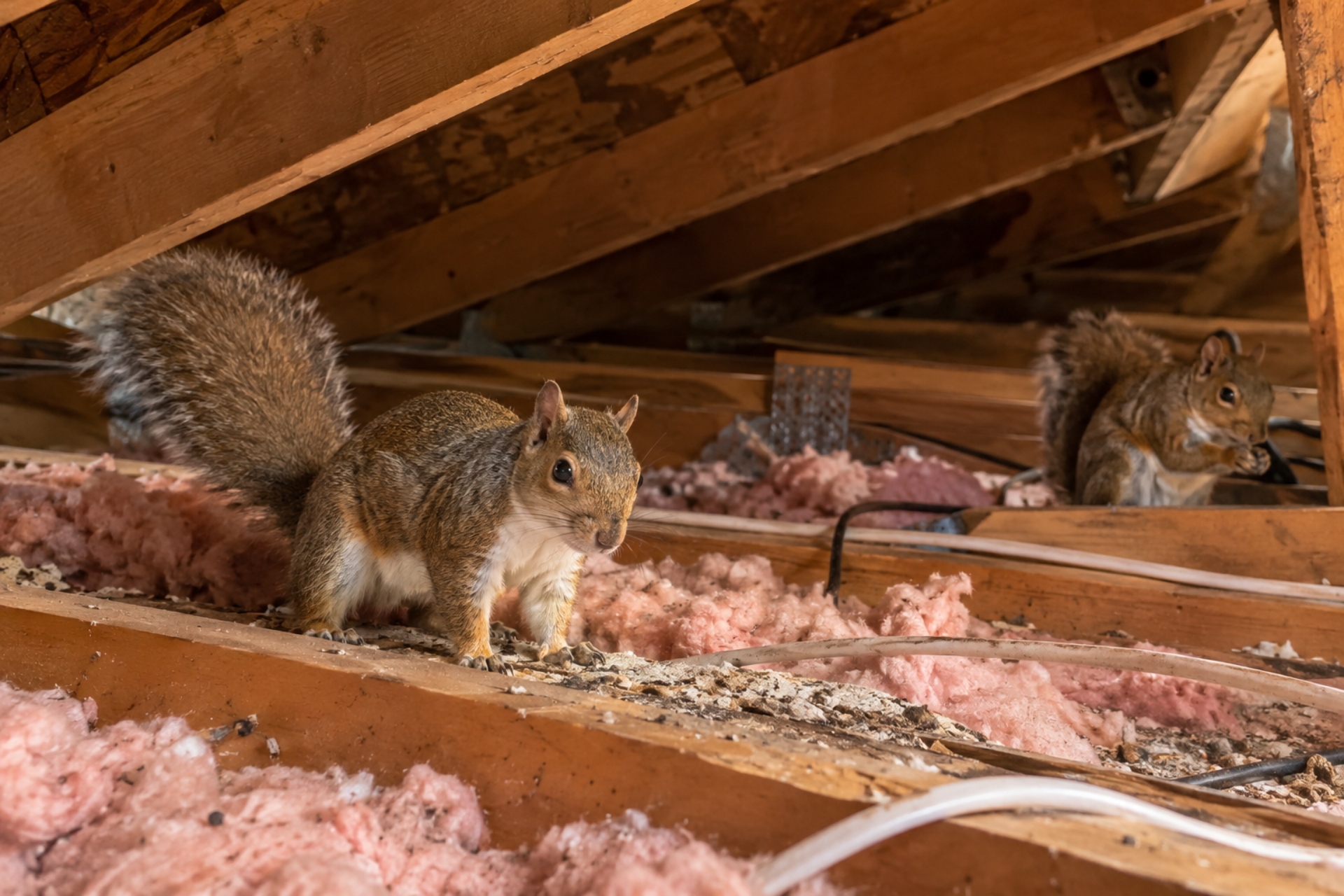
If you hear quick scratching above your ceiling in the morning, squirrels may be using your attic for shelter. Seeing one disappear beneath the roof edge is a stronger clue, but noises alone can leave you guessing about the animal involved. At True Guard Pest & Wildlife, our squirrel removal services include inspecting the attic and exterior so we can identify how squirrels are getting inside and explain the next steps for your Vancouver home.
An attic gives squirrels a covered place to rest and build a nest. During Vancouver’s rainy fall weather, an opening beneath an eave can lead to a sheltered space away from wind and rain. Once a squirrel starts returning, you may hear it moving between the entrance and its nesting area. Finding that entrance helps us address the problem without leaving the same route available afterward.
How to Recognize a Possible Squirrel Problem
Noises During Daylight Hours
Tree squirrels are generally active during the day. You might hear running, scratching, or gnawing early in the morning, followed by quieter periods while the animal is outside. Pay attention to when the sounds start and which rooms are directly beneath them. A short record of what you hear can help us decide where to begin looking.
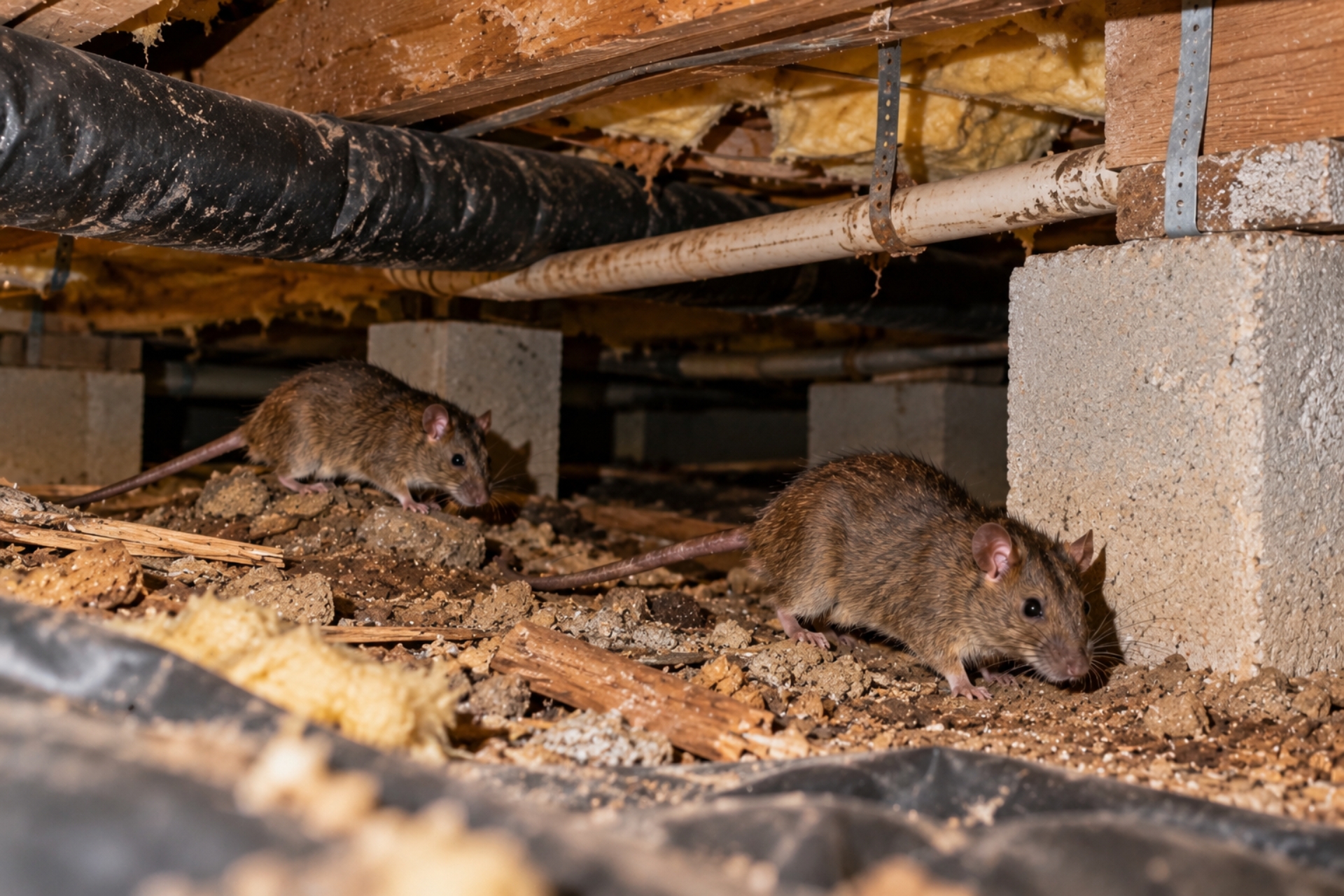
Rats and other animals can also make noises inside ceilings. The apparent size of an animal can be difficult to judge through drywall, and sounds can travel along framing. We use the timing alongside physical signs to identify what is present. A squirrel running across the roof can also sound as though it is inside, so the attic itself needs to be checked.
Repeated Trips Through the Same Opening
From a safe spot on the ground, watch for a squirrel entering a damaged vent, loose soffit, or gap near the roofline. A squirrel crossing the roof may simply be traveling through the yard. Repeatedly disappearing into an opening suggests it is using a space within the house.
Avoid climbing onto the roof or pulling apart a soffit to investigate. You can photograph the suspected entrance from below and show us where the animal went. That gives us a useful starting point while keeping you away from unstable ladders, roofing, and an animal that may be nearby.
What Squirrels Can Damage Inside an Attic
Squirrels can gnaw on wood, wiring, and other materials as they move around or enlarge an opening. Damaged wire insulation needs attention from a qualified electrician. The risk depends on what has actually been chewed, so we recommend checking affected areas to determine whether wiring has been damaged.
Insulation can become displaced or soiled around a nest. Leaves and other nesting materials may collect between framing members, and droppings can accumulate where the animal spends time. Keep children and pets away from attic access while the problem is being evaluated. Avoid handling nesting material or sweeping droppings into the air.
Damage near the entrance also needs a closer look. An opening in a soffit or vent may let rain into areas that should stay protected. If you notice a ceiling stain, have the moisture source evaluated along with the animal problem. Animal removal and correction of a roof leak may require different work.
Why Closing the Hole Comes Later
It can be tempting to cover an opening as soon as you find it. If squirrels are still inside, blocking their exit can leave them trapped. A squirrel may then try to reach another part of the house or chew a new way out. Dependent young also need to be considered before an entrance is closed.
Quiet periods can be misleading. An adult may be away gathering food while a nest remains inside, or the animal may be resting where you cannot hear it. We inspect the accessible nesting areas and entry routes before deciding how removal and exclusion should proceed. The condition of the attic and the animals present guide that decision.
What to Expect From Squirrel Removal
Our inspection includes looking for the entrance, signs of nesting, and damage in accessible areas. We can then explain which removal approach fits the situation. Depending on the findings, squirrel removal may involve trapping or an appropriate one-way exclusion device. Any exit device needs to be selected and used with the animals inside in mind.
After removal, the openings used by squirrels need to be secured with suitable materials. We also look for nearby weaknesses that could give another squirrel access. Vent protection must preserve airflow, and work around roofing or utilities needs to respect how those parts of the house function. Expanding foam alone can be chewed and is a poor choice for an exposed wildlife entrance.
Tree branches near the roof can provide an easy approach. If trimming would improve separation, use a qualified tree professional for work near the house or power lines. Securing birdseed and other outdoor food can also reduce reasons for squirrels to linger beside the building.
If you are hearing repeated daytime scratching or watching squirrels enter your roofline, contact our team at True Guard Pest & Wildlife. We can inspect your Vancouver home, explain what we find, and help you plan removal and entry-point protection based on the squirrels actually present.