
Portland homeowners encounter stinging insects regularly from late spring through early fall, and the species most common in this area—wasps, yellowjackets, and hornets—each present different risks and behaviors. Knowing which stinging insect you are dealing with helps determine how to respond and when to call for professional stinging insect control.
Paper Wasps
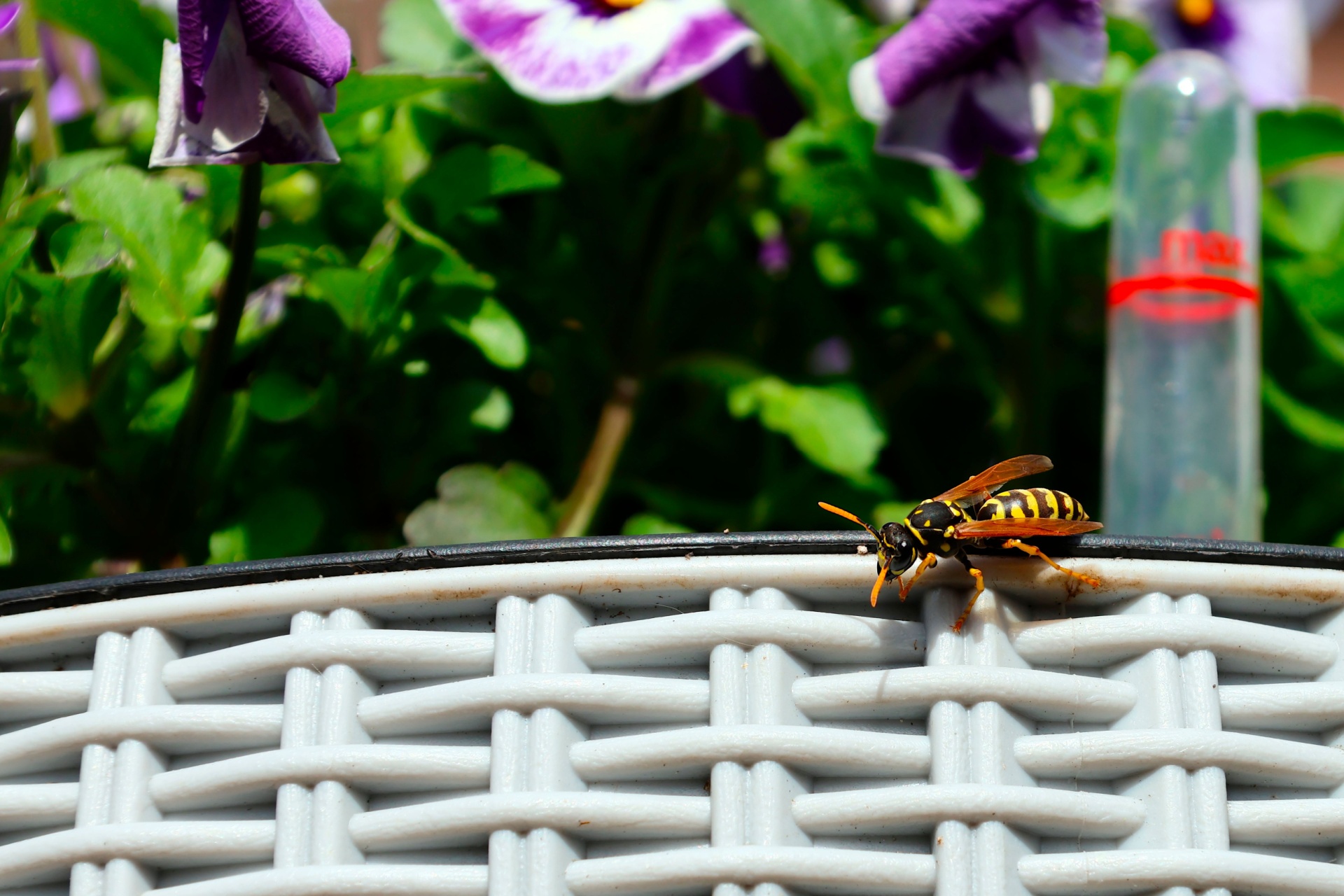
Paper wasps are one of the most frequently seen stinging insects around Portland homes. They are slender, with long legs that hang below their bodies during flight. Most species in the area are brown with yellow or reddish markings, and they measure roughly three-quarters of an inch to one inch in length.
Paper wasps build open, umbrella-shaped nests made from a papery material they create by chewing wood fibers. These nests are commonly found under eaves, porch ceilings, deck railings, and inside outdoor light fixtures. A mature nest may house a few dozen wasps.
Paper wasps are generally less aggressive than yellowjackets, but they will sting if they feel their nest is threatened. Their stings are painful and can cause allergic reactions in sensitive individuals. Because they tend to build nests in high-traffic areas around homes, encounters are common even when the colony itself is relatively small.
Yellowjackets
Yellowjackets are the stinging insect that causes the most problems for Portland homeowners. They are about half an inch long, with a stocky build and distinctive bright yellow and black banding. They are frequently confused with honeybees, but their bodies are smoother and less fuzzy, and their behavior is noticeably more aggressive.
Yellowjackets are social insects that build large colonies. In Portland, they nest both above and below ground. Underground nests—built in abandoned rodent burrows, under landscaping, or in soil along foundations—are especially dangerous because they are easy to disturb accidentally while mowing, gardening, or walking across the yard. Above-ground nests may be found in wall voids, attics, and hollow structures.
A single yellowjacket colony can contain thousands of workers by late summer. Yellowjackets become increasingly aggressive as the season progresses and food sources become scarce. They are strongly attracted to sugary foods, meats, and garbage, which brings them into frequent contact with people during outdoor meals and gatherings.
Unlike honeybees, yellowjackets can sting multiple times without losing their stinger. They also release an alarm pheromone when they sting, which can attract other members of the colony to join the attack. This makes disturbing a yellowjacket nest significantly more dangerous than an encounter with a single insect.
Bald-Faced Hornets
Despite their name, bald-faced hornets are technically a species of yellowjacket, but they are distinct enough in appearance and behavior that most people identify them separately. They are larger than common yellowjackets—about three-quarters of an inch long—with black bodies and white or pale markings on the face and abdomen.
Bald-faced hornets build large, enclosed, teardrop-shaped nests that are usually suspended from tree branches, building overhangs, or other elevated structures. These nests are made of the same papery material as paper wasp nests but are much larger and fully enclosed, sometimes reaching the size of a basketball or larger by late summer.
Bald-faced hornets are highly territorial and aggressive when their nest is approached. They can sting repeatedly and will pursue a perceived threat farther than most other stinging insects. Attempting to remove a bald-faced hornet nest without professional equipment and training is strongly discouraged.
European Hornets
European hornets are present in the Pacific Northwest, though they are less common than paper wasps and yellowjackets. They are the largest true hornet in the region, measuring over an inch in length, with brown and yellow coloring.
European hornets are unusual among stinging insects because they are active at night and are attracted to lights. They nest in hollow trees, wall voids, and attic spaces. While they are less aggressive than yellowjackets overall, they will defend their nest if disturbed, and their sting is notably painful due to their larger size.
When Stinging Insects Become a Problem
A single wasp flying through the yard is not necessarily a cause for concern. The situation becomes a problem when stinging insects establish nests on or near the home—under eaves, in wall cavities, in the ground near walkways, or inside structures like sheds and garages. Nests in high-traffic areas put household members and guests at risk, and the risk increases as colonies grow larger through the summer.
People with known allergies to insect stings face the highest risk, but even individuals without allergies can experience significant pain, swelling, and in rare cases, anaphylaxis from multiple stings.
True Guard Pest and Wildlife provides safe, effective stinging insect control for Portland homes. If you have identified an active nest on your property, contact us rather than attempting removal on your own. We will assess the situation and handle it safely.