
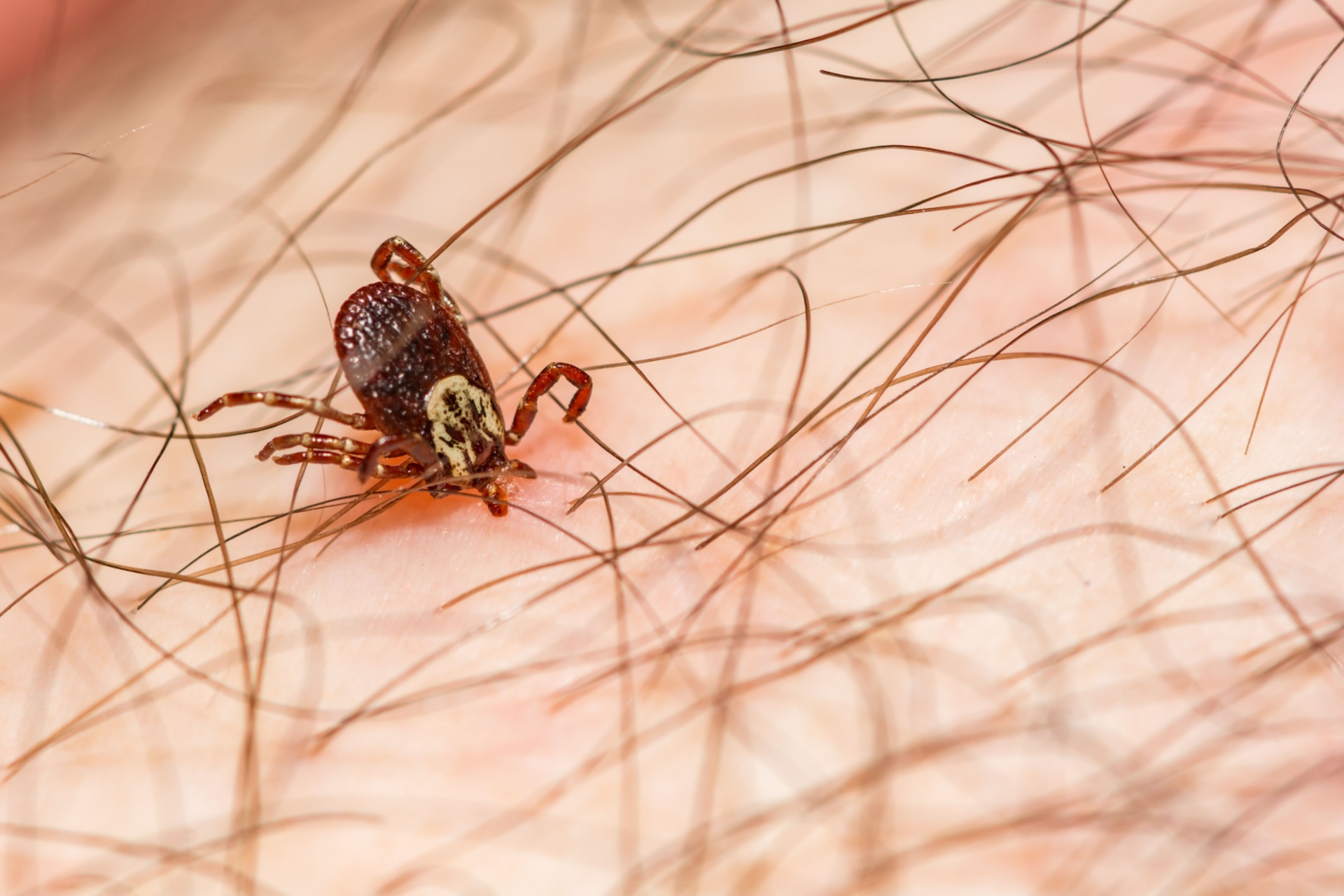
Ticks are present throughout the Portland metro area and across the Pacific Northwest, and knowing which species are in the region helps homeowners understand the risks these pests carry. Not all ticks transmit the same diseases, and different species are found in different habitats. If you are finding ticks on yourself, your family members, or your pets, identifying the species can be useful information—both for your own awareness and for any pest control treatment that follows.
Western Black-Legged Tick (Ixodes pacificus)
The western black-legged tick is the most medically significant tick species in the Pacific Northwest. It is the primary carrier of the bacteria that causes Lyme disease in western states, and it can also transmit anaplasmosis.
Adults are small, with females roughly the size of a sesame seed before feeding. Males are slightly smaller and darker. Females have a distinctive reddish-brown body with a dark brown or black dorsal shield near the head.
These ticks are most active during the cooler, wetter months—fall through spring—which makes them a year-round concern in Portland. They are commonly found in wooded areas, leaf litter, tall grass, and along trails. Yards that border forested or unmaintained land are at higher risk for western black-legged tick activity.
American Dog Tick (Dermacentor variabilis)
The American dog tick is one of the most recognizable tick species in the region. Adults are larger than western black-legged ticks, and females have a distinctive white or silver pattern on their dorsal shield. Males are mottled brown and white.
This species is a known carrier of Rocky Mountain spotted fever and can also cause tick paralysis in rare cases. American dog ticks are most active in spring and summer and are typically found in grassy, open areas—meadows, roadsides, and unmaintained fields. Despite their name, they will feed on a wide range of hosts, including humans.
In the Portland area, American dog ticks are commonly encountered in parks, along hiking trails, and in yards with tall grass or adjacent open land.
Rocky Mountain Wood Tick (Dermacentor andersoni)
The Rocky Mountain wood tick is closely related to the American dog tick and similar in appearance, though it is more commonly found at higher elevations and in drier, mountainous terrain. In the Pacific Northwest, this species is more prevalent in eastern Oregon and Washington than in the Portland metro area itself, but hikers and outdoor enthusiasts who travel to those regions should be aware of it.
This tick can transmit Rocky Mountain spotted fever, Colorado tick fever, and tularemia. It is most active from early spring through mid-summer.
Brown Dog Tick (Rhipicephalus sanguineus)
The brown dog tick is unique among common tick species because it can complete its entire life cycle indoors. While most tick species require outdoor environments to develop, the brown dog tick can infest homes, kennels, and other structures where dogs are present.
Adults are uniformly reddish-brown and lack the patterned markings found on other species. They feed almost exclusively on dogs and are unlikely to bite humans, though it can happen in heavy infestations.
In Portland, brown dog tick infestations are less common than in warmer climates, but they can become established in heated homes and indoor environments. If you are finding ticks on your dog year-round—even during winter—the brown dog tick is a likely suspect.
Pacific Coast Tick (Dermacentor occidentalis)
The Pacific Coast tick is found primarily along the West Coast from Oregon to Baja California. It is similar in size and appearance to the American dog tick, with females displaying a lighter-colored dorsal pattern.
This species feeds on a variety of hosts, including rodents, deer, dogs, and humans. It can transmit Rocky Mountain spotted fever and a condition called 364D rickettsiosis. Pacific Coast ticks are most active in spring and are found in grasslands, chaparral, and along trails.
Reducing Tick Exposure Around Your Home
Regardless of the species, the approach to reducing tick exposure on your property is consistent. Keep grass mowed and vegetation trimmed, especially along yard edges and walkways. Remove leaf litter and brush piles where ticks shelter. Create a buffer zone of gravel or mulch between wooded areas and lawn space. Check people and pets for ticks after time spent outdoors.
For properties with persistent tick activity, professional yard treatments can significantly reduce the tick population in the areas where your family and pets spend time. True Guard Pest and Wildlife provides targeted flea and tick control services for Portland homes and yards. Reach out to schedule a free estimate if ticks are a recurring issue on your property.