

Portland’s wet climate is one of the primary reasons ant infestations are so persistent in this area. Sustained rainfall, mild temperatures, and high humidity create year-round pressure on homes, and ant control in Portland requires an approach that accounts for these conditions. A treatment plan that works in a dry climate may not hold up in the Pacific Northwest.
This guide covers what Portland homeowners should know about managing ants in a region where moisture is a constant factor.
How Portland’s Weather Drives Ant Behavior
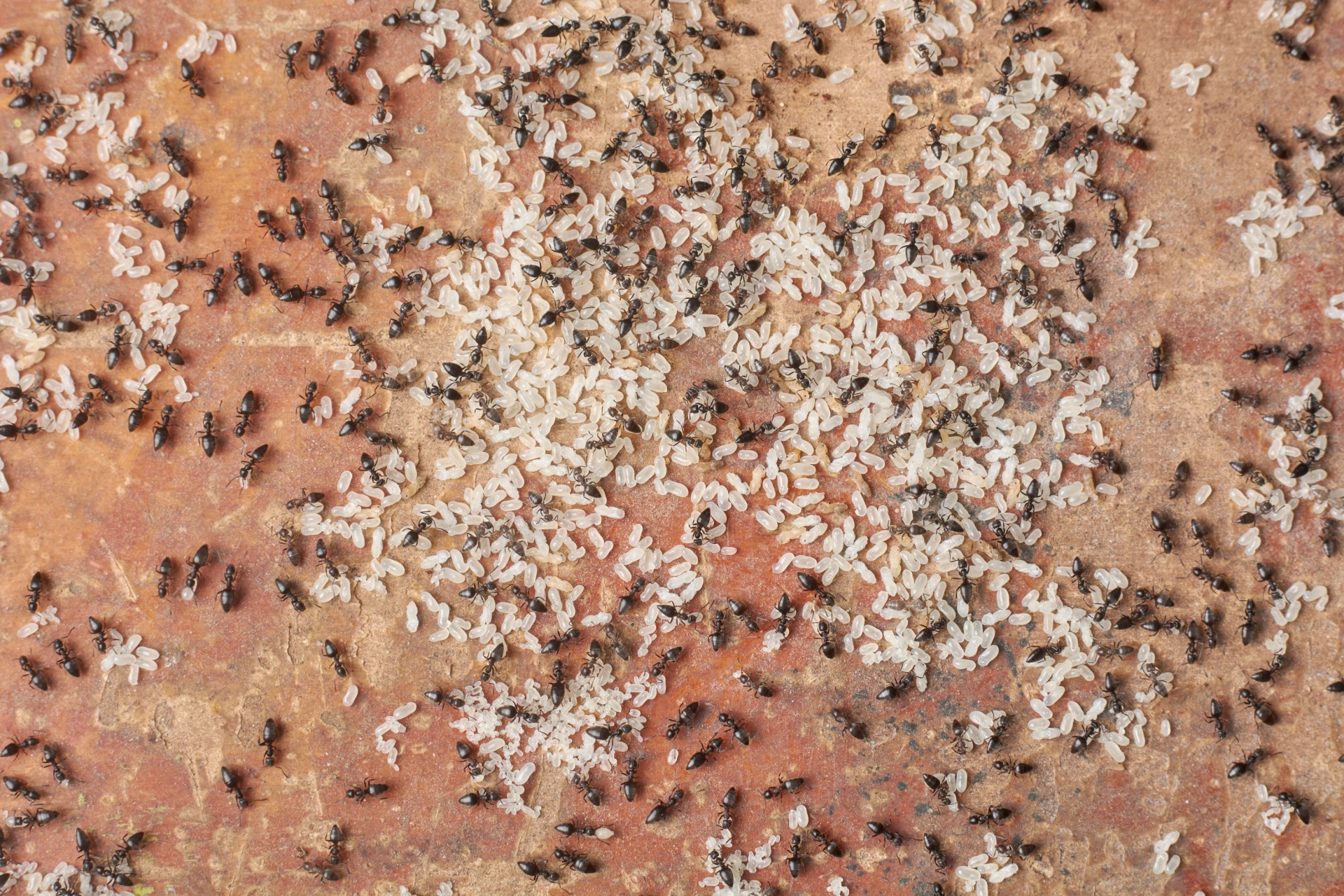
Ants respond to environmental changes, and rain is one of the biggest triggers for indoor invasions. When heavy rain saturates the ground, outdoor nests can flood, forcing colonies to relocate. The nearest dry shelter is often a home’s foundation, crawl space, or wall cavity.
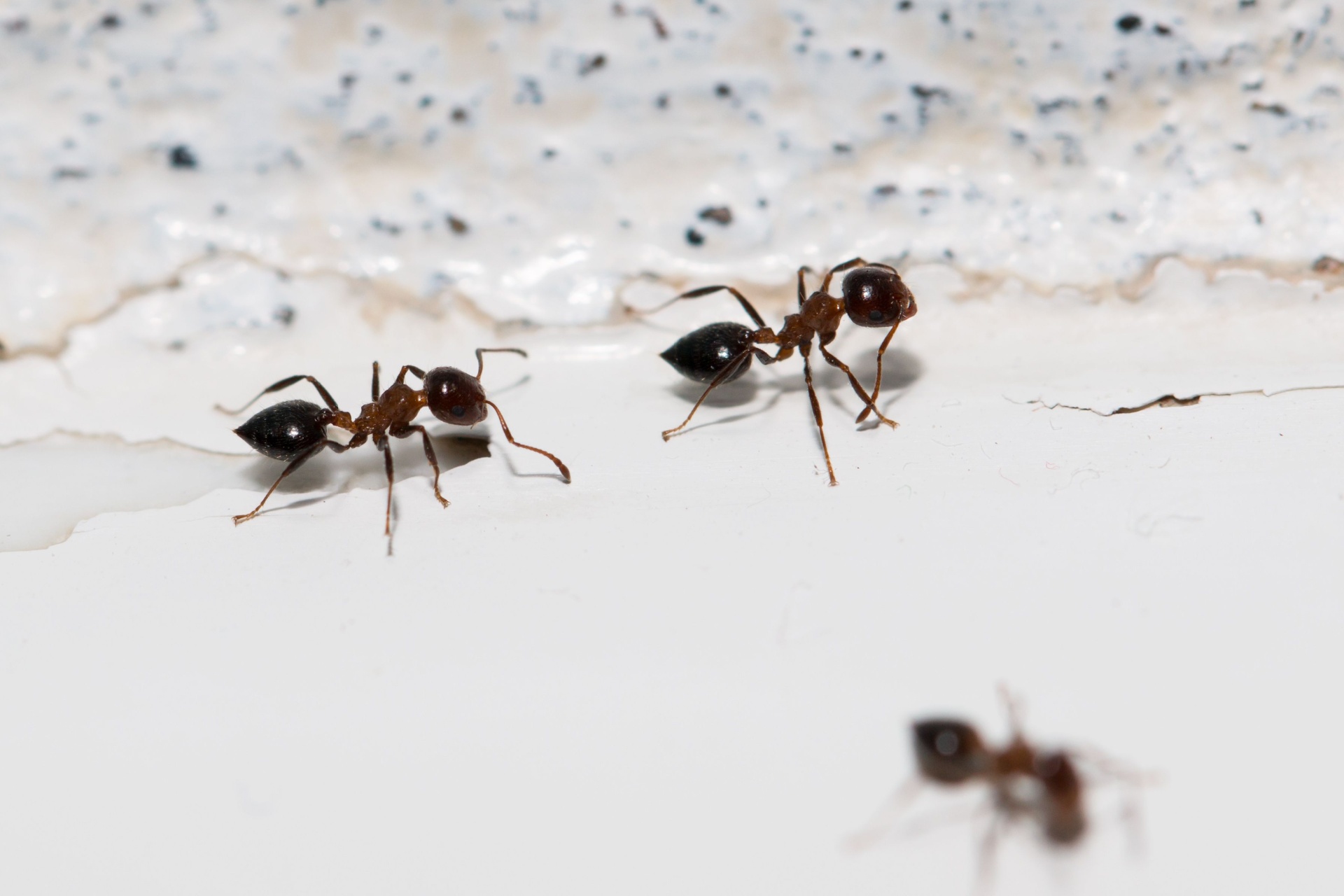
Portland’s wet season is long—rain is common from mid-fall through late spring—so the window for ant pressure extends well beyond the summer months that most homeowners associate with pest activity. Carpenter ants, odorous house ants, and moisture ants all become more active indoors during prolonged wet stretches.
Even during drier summer months, Portland’s relatively cool mornings and residual ground moisture keep conditions favorable for ants near the home’s exterior.
Indoor Moisture Control
Because so many Portland ant species are attracted to moisture, controlling humidity inside the home is a critical part of long-term ant management.
- Inspect crawl spaces for standing water, excessive condensation, and damaged vapor barriers.
- Repair leaking pipes, faucets, and fixtures promptly. Even a slow drip under a kitchen or bathroom sink can sustain a colony.
- Use exhaust fans in bathrooms and kitchens to reduce humidity.
- Check attic ventilation to prevent moisture buildup in roof structures, which can attract carpenter ants.
- Address any water intrusion around windows, doors, and foundation walls.
Eliminating moisture sources removes one of the key reasons ants nest indoors in the first place.
Exterior Prevention
The area immediately surrounding your home is where most ant problems begin. Reducing ant-friendly conditions around the exterior can significantly lower the chances of an indoor infestation.
- Keep mulch beds at least six inches away from the foundation, and avoid piling mulch more than two to three inches deep.
- Trim tree branches and shrubs so they do not contact the roof, siding, or eaves.
- Store firewood away from the house and off the ground.
- Clear leaf litter and organic debris from gutters, downspouts, and foundation edges.
- Seal visible cracks and gaps around windows, doors, utility penetrations, and foundation joints.
These steps reduce the pathways ants use to travel from outdoor nests into the structure.
Why Store-Bought Products Often Fail
Many homeowners try to manage ant problems with over-the-counter sprays and baits before calling a professional. In Portland’s wet climate, these products face additional challenges.
Outdoor sprays wash away quickly in the rain, reducing their effectiveness within days or even hours. Indoor sprays that contain repellent chemicals can cause ant colonies to scatter and establish new nesting sites—a behavior called budding—which often makes the infestation worse. Store-bought baits may attract some foraging ants, but they are rarely formulated to eliminate an entire colony, especially a large or well-established one.
Professional-grade treatments are designed to hold up in wet conditions and are applied strategically based on the species involved, the location of the colony, and the layout of the home.
What Professional Ant Control Looks Like in Portland
Effective ant control in a wet climate starts with a thorough inspection. A technician will identify the ant species present, locate active nesting sites, determine how ants are entering the structure, and assess any moisture or structural conditions contributing to the problem.
Treatment plans are customized from there. Common methods include targeted baiting systems that allow worker ants to carry the product back to the colony, non-repellent barrier treatments applied around the home’s exterior, and interior treatments in areas where ants are nesting or foraging. For carpenter ants, treatment may also include addressing the damaged or moisture-compromised wood where the colony has established itself.
Follow-up visits ensure the treatment is working and that new colonies have not moved in, which is especially important in Portland, where environmental pressure is constant.
Long-Term Management
Ant control in Portland is not a one-time fix. The same wet conditions that caused the first infestation will continue to attract ants season after season. Ongoing prevention services—combined with good moisture management and exterior maintenance—provide the most reliable protection over time.
True Guard Pest and Wildlife builds ant control plans around Portland’s specific conditions. We understand the species, the climate, and the types of homes in this area. Contact us to schedule an inspection and get a treatment plan in place before the next rain cycle pushes ants back indoors.