

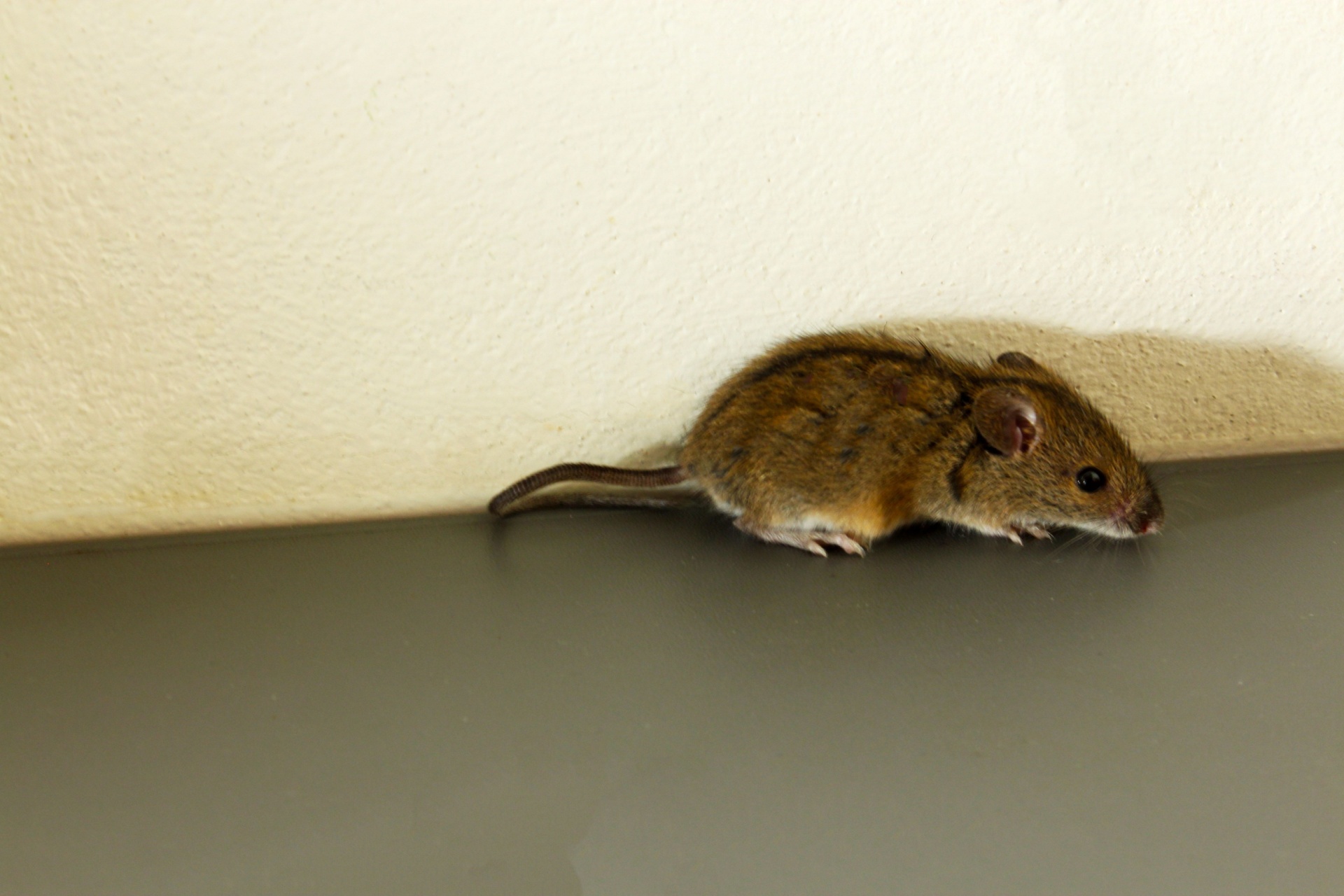
When you hear scratching in your walls or discover droppings in your pantry, knowing whether you’re dealing with mice or rats significantly impacts your response strategy. While both are unwelcome guests, these rodents differ substantially in size, behavior, habits, and the type of damage they cause. Accurate identification leads to more effective rodent control and helps you understand the severity of your Portland home’s infestation.
Size and Physical Appearance
Mice are considerably smaller, typically measuring 5-8 inches from nose to tail tip and weighing just half an ounce to one ounce. They have proportionally large ears, small heads, and thin tails covered in fine fur. House mice are usually dusty gray with cream-colored bellies, though color can vary.
Rats are substantially larger—specifically, the two species common in Portland are Norway rats and roof rats. Norway rats (also called brown rats) are heavy-bodied, weighing 7-18 ounces and measuring 13-18 inches total length. They have small ears, blunt noses, and thick, scaly tails shorter than their body length. Roof rats (also called black rats) are more slender, weighing 5-9 ounces and measuring 13-18 inches, with large ears, pointed noses, and tails longer than their bodies.
Behavioral Differences
Mice are curious explorers. They investigate new objects and environments readily, which is why mouse traps often catch mice relatively quickly. Mice prefer to eat small amounts of many different foods, sampling various items throughout the night. They rarely travel more than 10-30 feet from their nests.
Rats are cautious and neophobic (fearful of new things). They avoid new objects in their environment for several days, making them harder to trap. Norway rats prefer consistent food sources and will return to the same feeding location repeatedly. They’re also better swimmers and more aggressive. Rats travel much farther from nests—up to 100-150 feet—in search of food and water.
Where They Live in Your Home
Mice are ground-level nesters. They build nests in wall voids, cabinets, stored boxes, behind appliances, and in cluttered areas. Mice prefer enclosed spaces and will nest directly inside food storage areas if accessible. They can climb, but they typically stay low to the ground.
Rats choose different locations based on species. Norway rats are burrowers that prefer ground-level locations—basements, crawl spaces, behind walls on lower floors, and burrows under concrete slabs or garden debris. Roof rats are excellent climbers that nest in elevated areas—attics, upper wall voids, trees, and thick vegetation. Understanding this distinction helps you focus inspection and control efforts appropriately.
Damage Patterns
Mice create small gnaw marks. Their teeth marks are tiny – about 1/16 inch. They gnaw small, clean holes in food packaging and create penny-sized entry holes in walls or baseboards. Mice often gnaw to create passageways rather than due to hunger.
Rats create substantial damage. Their gnaw marks are larger – about 1/8 inch – and more destructive. Rats can gnaw through wood, plastic, soft metals, and even concrete. They create much larger entry holes (two inches or more) and cause severe damage to structures, wiring, and plumbing. A rat infestation represents significantly greater property damage potential than mice.
Noise Differences
Mice make light, fast scratching sounds. Their movements are quick and scurrying, often described as sounding like light footsteps. You might hear squeaking, especially if multiple mice are present. The sounds are typically within walls or ceilings.
Rats make heavier, slower sounds. Their movements are more deliberate and louder – distinct thumping or walking sounds rather than scurrying. Rats are also vocal, producing chattering, grinding, or squeaking sounds. The heavier sounds make rat presence more obvious to homeowners.
Population Growth Rates
Both species reproduce rapidly, but at different rates.
Mice reach sexual maturity at 6-10 weeks and can produce 5-10 litters per year with 5-6 babies per litter. A single pair of mice can theoretically produce 200+ offspring in a single year under ideal conditions.
Rats mature slightly slower at 2-5 months and produce 4-7 litters per year with 6-12 babies per litter. While individually rats reproduce somewhat slower than mice, their offspring are larger and more destructive from the start.
Why Proper Identification Matters
Treatment approaches differ significantly. Mice respond well to snap traps and smaller bait stations. Rats require larger traps, different bait formulations, and more sophisticated placement strategies. Using mouse-sized traps for rats wastes time and money.
Exclusion requirements differ. Mice can fit through openings the size of a dime (1/4 inch), while rats need quarter-sized openings (1/2 inch for young rats, slightly larger for adults). Exclusion work must account for these size differences.
Timeline and urgency vary. While both require prompt attention, rat infestations typically represent more urgent situations due to greater damage potential and health risks.
If you’re unsure which rodent species is in your Portland home or need help developing an appropriate response strategy, don’t guess. Professional identification and treatment recommendations ensure you address the problem effectively. Contact True Guard Pest & Wildlife for expert rodent identification and customized control solutions.