
Black widow spiders are one of the few spiders in Oregon that deserve extra attention, but they’re far less common than many homeowners believe. While sightings are relatively rare in much of the state, these venomous spiders can still appear in the right environments, especially around secluded outdoor structures and undisturbed spaces. The more you understand about where black widow spiders live and how they behave, the easier it becomes to recognize the situations that truly deserve your attention.
Where Are Black Widow Spiders Most Commonly Found in Oregon?
When people think about black widow spiders in Oregon, they often assume these spiders are common throughout the state. In reality, their distribution is much more limited. While sightings remain relatively uncommon, black widows consistently favor places that provide the right combination of shelter, stability, and food.
- Places that stay undisturbed for weeks or months: Black widows rarely build webs where there’s frequent activity. Instead, they gravitate toward spaces that people seldom access, allowing their webs to remain intact.
- Dark spaces with natural cover: Woodpiles, crawl spaces, retaining walls, rock landscaping, the undersides of decks, and storage sheds all create the sheltered conditions that black widows naturally seek.
- Properties where insects are already active: Black widows establish themselves where prey is readily available. Homes with abundant flies, beetles, crickets, or other insects can provide a steady food source that encourages spiders to remain nearby.
- Items stored outdoors for long periods: Firewood, stacked lumber, bricks, gardening supplies, outdoor furniture, and storage bins can become hiding places when they’re left untouched for extended periods.
- Warmer, drier parts of Oregon: The western black widow (Latrodectus hesperus) is most commonly found in southern and eastern Oregon, where the climate is generally more favorable. Although sightings in Portland and northwest Oregon are uncommon, isolated encounters can still occur when spiders are accidentally transported on outdoor materials or equipment.
Why Black Widows Prefer Certain Outdoor Spaces
Black widows don’t wander through homes looking for people. Like most spiders, they choose environments that offer protection from predators, stable conditions, and a reliable source of food. Instead of moving frequently, they often remain in one location for long periods if their web continues to provide shelter and a steady supply of insects.
Outdoor spaces that receive little disturbance naturally become more attractive over time. Areas such as woodpiles, detached garages, crawl spaces, storage sheds, retaining walls, and the undersides of decks provide the dark, protected conditions that allow black widows to remain hidden throughout the day. These locations also reduce the chances of their webs being damaged by regular human activity, allowing the spiders to conserve energy while waiting for prey.
Food availability is another important reason black widows stay in certain areas. Properties with active insect populations offer a consistent food source, making it easier for spiders to establish themselves. Outdoor lighting that attracts flying insects, cluttered storage areas that shelter crawling pests, and neglected corners of a yard can all contribute to conditions that support black widow activity. Reducing these favorable conditions not only makes your property less appealing to black widows but can also discourage many other spider species from settling nearby.
How to Tell If You’ve Found a Black Widow Spider
Not every black spider is a black widow. In fact, homeowners often mistake harmless species for the Oregon black widow spider, leading to unnecessary concern.
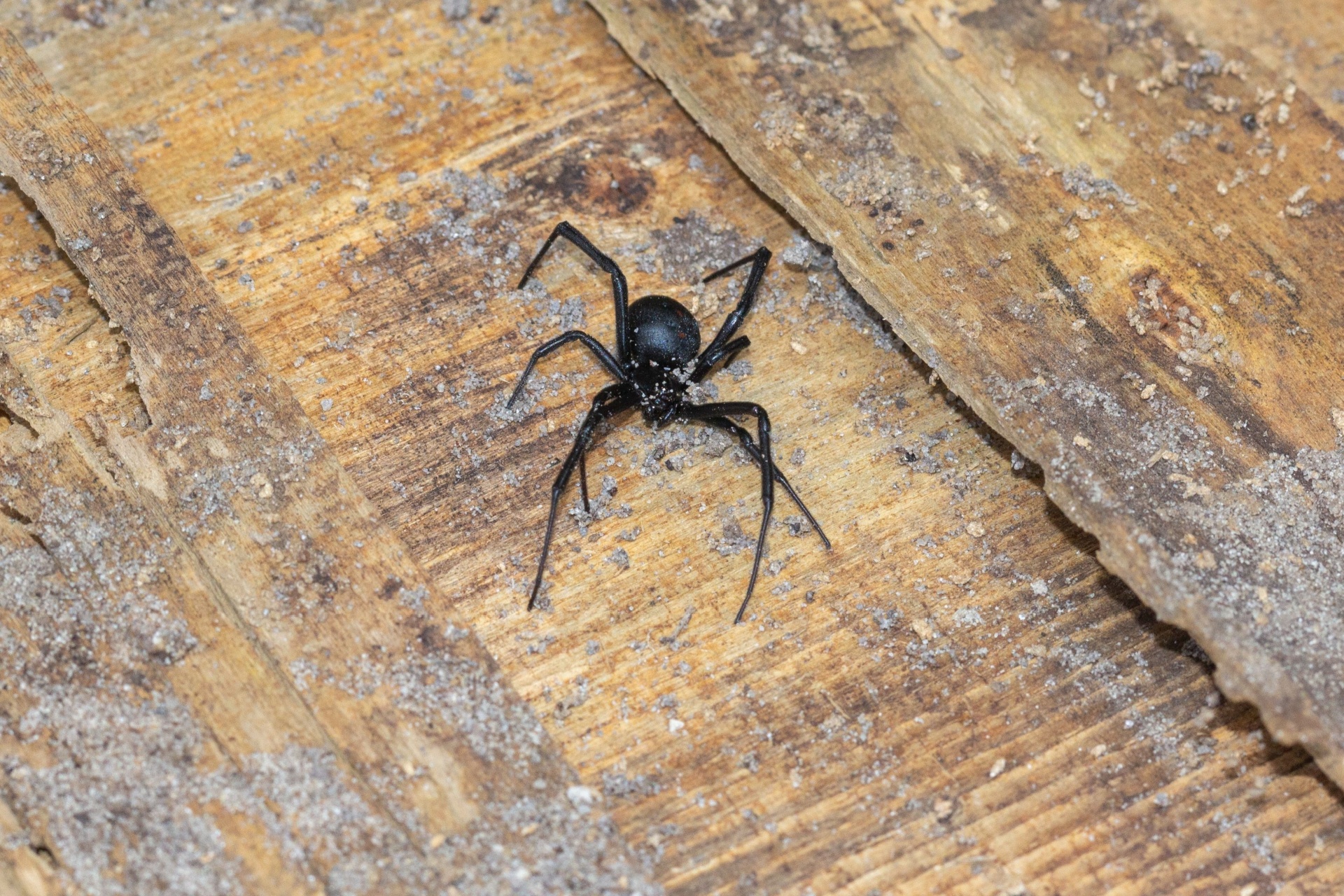
Female black widows have several distinctive characteristics that make them easier to identify:
- A glossy jet-black body with a smooth, rounded abdomen
- A red or orange hourglass marking on the underside of the abdomen
- Long, slender legs with a shiny appearance
- An irregular, tangled web instead of a neat circular web
- A tendency to stay hidden during the day and become more active at night
Male black widows are much smaller, lighter in color, and rarely bite people. Because proper identification can sometimes be difficult, it’s best to avoid handling any spider you suspect may be a black widow.
Should Oregon Homeowners Be Concerned?
Black widows are among the few poisonous spiders in Oregon, but it’s important to understand their behavior before assuming the worst. While their venom is medically significant, encounters with black widows remain relatively uncommon for most homeowners. These spiders prefer to stay hidden and are far more likely to avoid people than seek them out.
Despite their reputation, black widows are naturally shy and typically remain in secluded areas where they are unlikely to be disturbed. Most bites occur when someone accidentally reaches into a hidden web while moving firewood, lifting storage containers, gardening, or working in crawl spaces, sheds, and garages. Rather than acting aggressively, black widows usually bite only when they feel trapped or threatened.
If a bite does occur, symptoms may include pain near the bite, muscle cramps, abdominal discomfort, nausea, sweating, and muscle stiffness. Although these symptoms can be serious, severe complications are relatively uncommon when medical treatment is received promptly. Children, older adults, and individuals with certain underlying health conditions should seek immediate medical attention if a black widow bite is suspected.
For most Oregon homeowners, the greatest benefit comes from knowing where black widows are most likely to hide and using caution when working in those areas. Taking a few simple precautions and recognizing potential hiding places can significantly reduce the chances of an accidental encounter while allowing you to enjoy your property with greater peace of mind.
How to Stay Safe Around Black Widow Spiders
Staying safe around black widow spiders starts with understanding where they’re most likely to be found and avoiding accidental contact with their hiding places. Since these spiders prefer quiet, undisturbed areas such as woodpiles, sheds, crawl spaces, garages, and outdoor storage, taking a moment to inspect these spaces before reaching inside can greatly reduce the risk of an encounter. Simple habits like wearing gloves when moving stored materials and keeping outdoor areas clean and organized can also make your property less attractive to black widows over time.
Even with good prevention practices, black widow spiders can be difficult to spot because they spend much of their time hidden in secluded areas. If you’ve found a spider you can’t confidently identify or want reassurance that your home isn’t providing ideal conditions for black widows, having the spider evaluated by a knowledgeable professional can help you avoid unnecessary risks and ensure the right approach is taken.
True Guard Pest and Wildlife helps Portland homeowners stay safe by identifying whether a suspected spider is truly a black widow, locating the conditions that may be attracting spider activity, and providing targeted treatments when needed. Our local experience allows us to distinguish black widows from the many harmless spiders commonly found around Portland, helping you make informed decisions. If you’re concerned about a spider you’ve found around your home, contact True Guard Pest and Wildlife for expert spider identification and black widow control.