
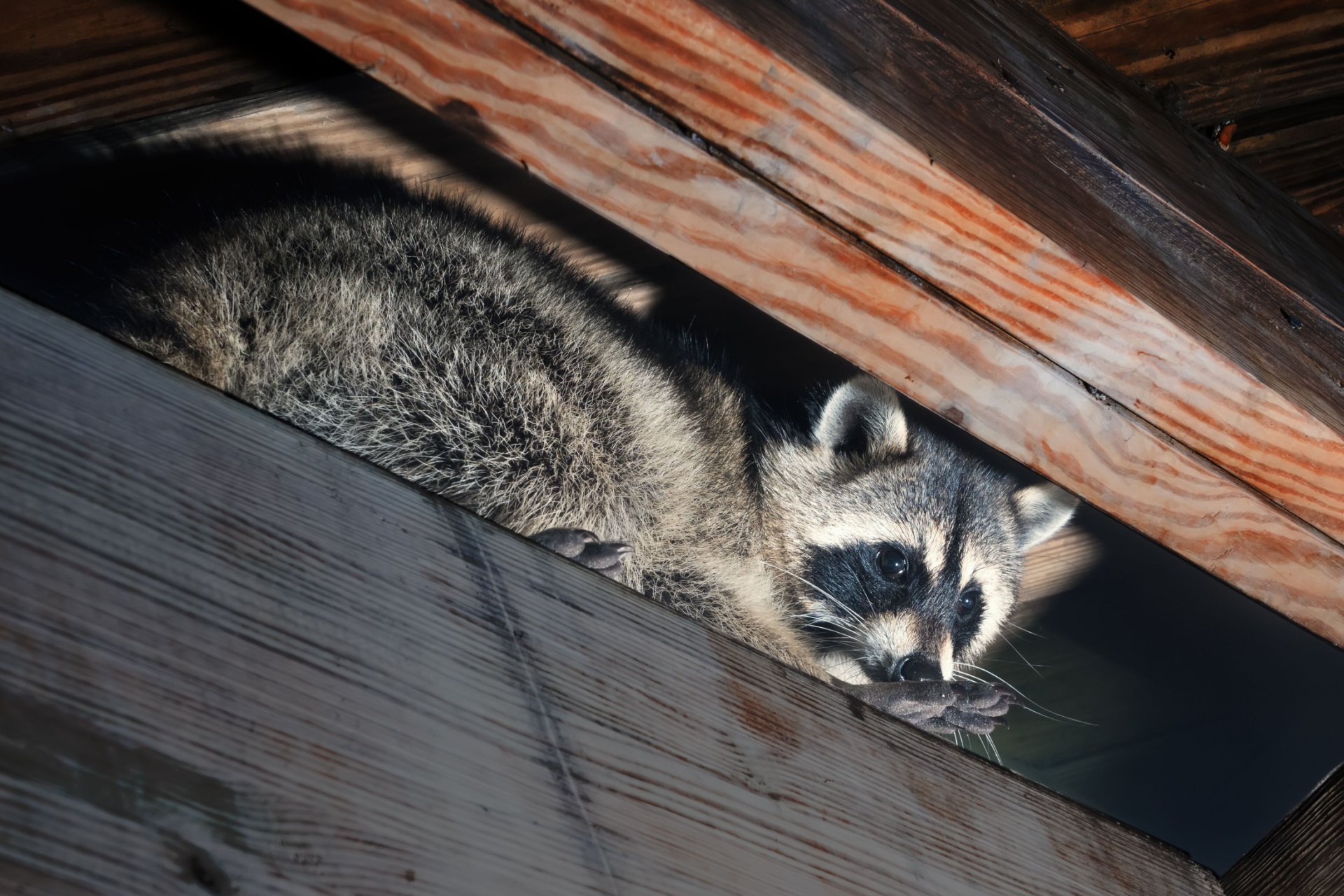
Raccoons are highly adaptable animals that view your attic or chimney as the perfect place to raise a family or escape Portland’s rainy weather. Unlike mice or rats that might go unnoticed for months, raccoons make their presence known – if you know what signs to look for. By the time you actually see a raccoon entering or leaving your home, they’ve likely been there for a while. Early detection of raccoon activity is crucial to minimizing damage and addressing the problem before babies are born.
1. Heavy Thumping Sounds at Night
The most obvious sign of a raccoon in your attic is noise – and lots of it. Unlike the light scratching sounds mice make, raccoons create heavy thumping, walking sounds, and vocal communication. Raccoons are much larger than rodents (typically 10-30 pounds), so their movements are unmistakable.
You’ll typically hear these sounds at night since raccoons are nocturnal. Listen for walking, running, scratching, and sometimes chirping or chattering sounds. If you hear multiple raccoons, you might be dealing with a mother and her kits. Baby raccoons are particularly vocal, making distinctive crying sounds when the mother leaves to forage.
2. Strong, Unpleasant Odors
Raccoons create latrines – designated bathroom areas where they repeatedly defecate and urinate. When these latrines are in your attic, the smell becomes overwhelming. The odor is strong, musky, and distinctly different from rodent urine.
This smell intensifies over time and can permeate into your living spaces, particularly if latrines are located directly above bedrooms or living areas. The urine can also soak through insulation and stain ceilings, creating both structural damage and health hazards.
3. Visible Entry Points and Damage
Raccoons need substantial openings to enter your attic – typically at least four to six inches. They’re capable of enlarging existing gaps or creating new ones. Common entry points include:
- Damaged or missing roof vents
- Torn soffit panels or fascia boards
- Gaps where rooflines meet
- Damaged areas around dormers or skylights
- Broken or removed chimney caps
Look for claw marks, torn materials, or areas where shingles have been pulled back. Raccoons have dexterous paws and considerable strength, allowing them to pull apart weak spots in your home’s exterior.
4. Chimney-Specific Signs
Chimneys are particularly attractive to raccoons because they offer protection and security similar to hollow trees – their natural denning sites. Signs of raccoons in your chimney include:
- Scratching or chirping sounds coming from the flue
- Visible nesting materials (leaves, twigs, insulation) in the fireplace
- Soot or debris falling into your fireplace
- Strong animal odor when the damper is open
- Visible raccoon presence when looking up the chimney with a flashlight
Female raccoons often choose chimneys as nursery sites in spring. Never light a fire if you suspect raccoons are present – this can kill baby raccoons and trap adult animals, creating an emergency situation.
5. Damaged Insulation and Building Materials
Once inside your attic, raccoons cause significant damage. They tear apart insulation to create nesting areas, compress insulation under their weight (reducing its effectiveness), and may damage electrical wiring, HVAC ducts, and stored belongings.
If you can safely access your attic, look for flattened pathways through insulation, torn materials, and scattered debris. Raccoons also may chew on wood beams and rafters, compromising structural integrity over time.
6. Droppings and Tracks
Raccoon droppings are distinctive – typically two to three inches long, dark in color, and often containing undigested food particles like berries or seeds. Unlike rodent droppings that are scattered randomly, raccoon feces are usually found in concentrated latrine areas.
In dusty attic spaces, you might also see raccoon tracks. Their prints show five distinct toes on both front and back paws, with the front paw print resembling a small human hand.
7. Disturbed or Damaged Property Outside
Raccoons don’t teleport into your attic – they have to climb to get there. Look for signs of their approach:
- Claw marks on downspouts, siding, or trees near your home
- Damaged or bent gutters from raccoon weight
- Disturbed landscaping near foundation areas
- Overturned garbage cans or disturbed trash
8. Daytime Sightings
While occasional daytime activity is normal (especially for nursing mothers who need to forage more frequently), regularly seeing raccoons during daylight hours suggests either overcrowding or established residence. A raccoon consistently appearing during the day near your roofline or chimney is a strong indicator of denning activity.
What NOT to Do
Never attempt to seal entry points while raccoons are inside. If babies are present and separated from their mother, they’ll die in your attic, creating an even worse problem. Don’t use smoke, bright lights, or loud music as deterrents – while these might temporarily annoy raccoons, they rarely result in permanent relocation and can stress nursing mothers.
The Importance of Professional Assessment
Raccoon removal requires expertise. Professionals can determine if babies are present (which changes removal timing), identify all entry and exit points, use appropriate exclusion devices, and ensure humane treatment of animals. They also understand Oregon’s wildlife regulations and work within legal parameters.
Attempting DIY removal puts you at risk for bites, scratches, and disease exposure. Raccoons can carry rabies, roundworm parasites, and other pathogens that pose serious health risks.
If you’ve noticed any of these signs, don’t delay. The longer raccoons remain in your attic or chimney, the more extensive the damage becomes – and the more expensive repairs will be. Contact True Guard Pest & Wildlife today for professional raccoon removal and exclusion services that protect your Portland home.